This email cam in a couple of weeks ago. We replied asking ned if we could post it here because we thought that you all might fine it usdeful, interesting, or both.
Thanks Ned, and nice job.
Dear Fine Homebuilding Editor:
I always find articles of interest in Homebuilding each issue, but your March 2011 had an article that really grabbed my attention— “Framing the bell curve” by Noah Woodruff. Imagine! Someone else with the same project I am currently completing.
I have admired the Taylor Office building in Williamsburg for years, mainly because of its ogee roofline. In an attempt to build this, I’ve made a few trips to Williamsburg and have also found some information online. Nothing, however, could help me with replicating the bell-shaped roof.
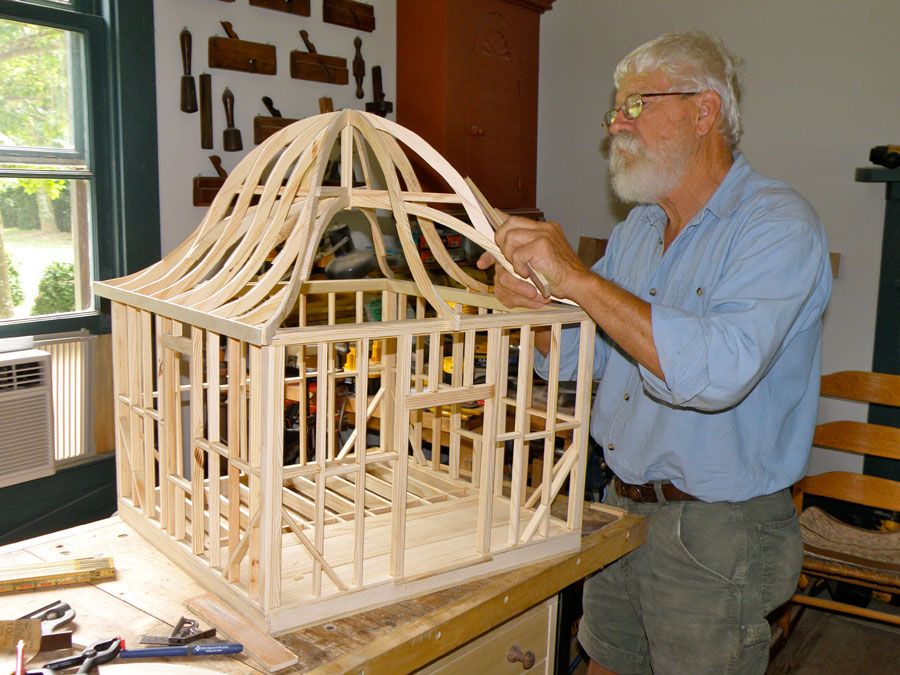
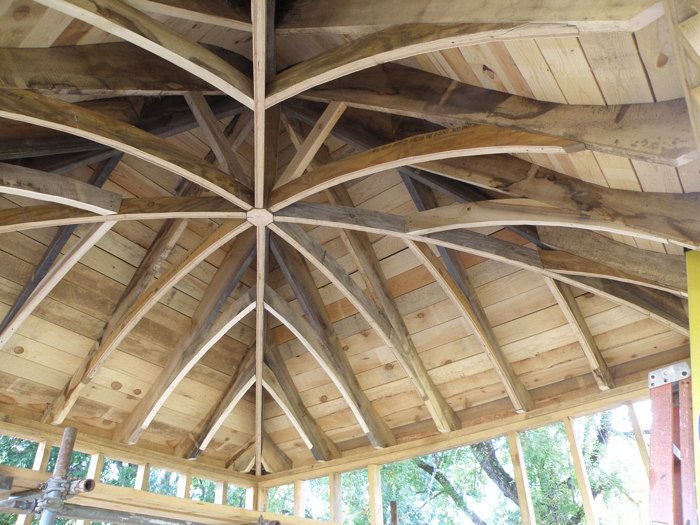
First, I built a scale model and after a great deal of trial and error, got the roof shape I was looking for. Transcribing this into a full-scale plan/template was another matter, so I took my model to the local high school drafting class. They were able to plot the coordinates to scale, not only providing patterns for the ogee rafters, but also for the vaulted ceiling rafters. I also used a couple of plywood full-scale mock-ups to give me visual conformation of the shape before using the 2 by 24 inch by 15 feet poplar boards I had previously sawn on my Woodmizer bandsaw.
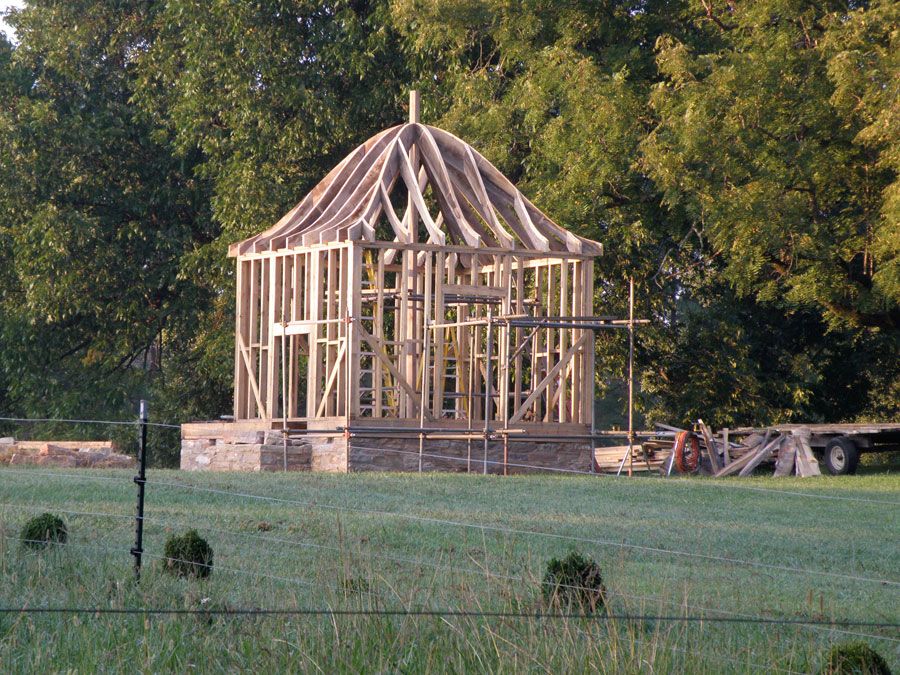
I cut the rafters with a jigsaw and fitted them against a central 6 by 6 octagon pole (also sawn on the mill and later cut off at ceiling level). Each rafter was attached with 4-inch wood screws. All studding, joists and tapered siding were cut from pine on my farm. I used a router to cut the ogee bead on the siding as this matches the circa 1779 home adjacent to it. Unlike the original Taylor Office building, I have added a lean-to to the back and have used fieldstone for the foundation and chimney to match my home. I also made the window sashes and frames and used old, wavy glass. Flooring is salvaged, random-width tongue and groove quarter-cut pine.
There is still the inside to complete, but I can identify with the problems Noah Woodruff and his crew must have encountered and can see how successful his use of the scribing board was to achieve such a handsome roofline. Thanks for the article.
Sincerely,
R. Edward “Ned” Strange
-
Click to enlarge
-
Click to enlarge
-
Click to enlarge