An 1/8th inch crack along a window doesn’t seem like much to worry about, but a 1/8th in. crack running the length of your house is like an open window. If that collective crack really were a hole, you could toss a cat through it. But because it is a crack, you can seal it with caulk.
Not all holes in the building envelope however, are cracks that can be sealed with a tube of caulk. Some of them really are big enough to toss a cat through. The Energy Star Thermal Bypass Checklist covers the most common gaps and holes in new houses, so this is a great place to start if you want to build a tight house.
Green Building Advisor has a collection of 56 detail drawings that will get you through the Energy Star checklist or help you build a tight house. Five of the details in that collection are discussed in this episode of the Lunch Pail podcast series by Mike Guertin and Peter Yost.
The holes discussed here are
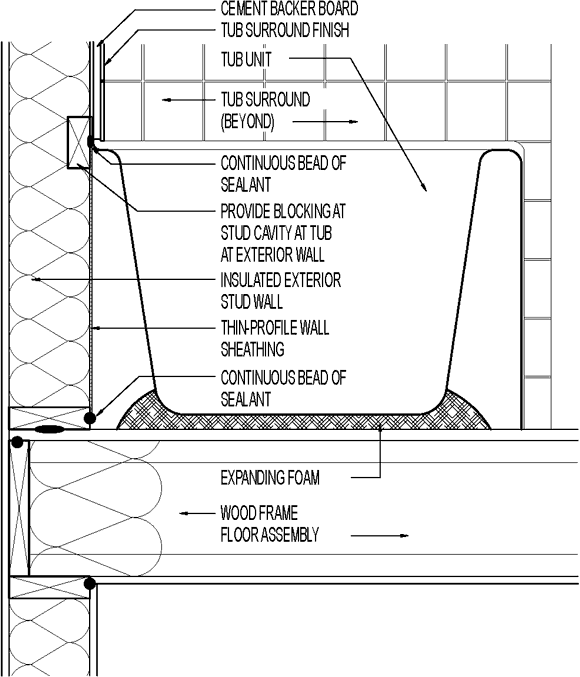
- Behind a tub or shower unit
- Between an attached garage and living space
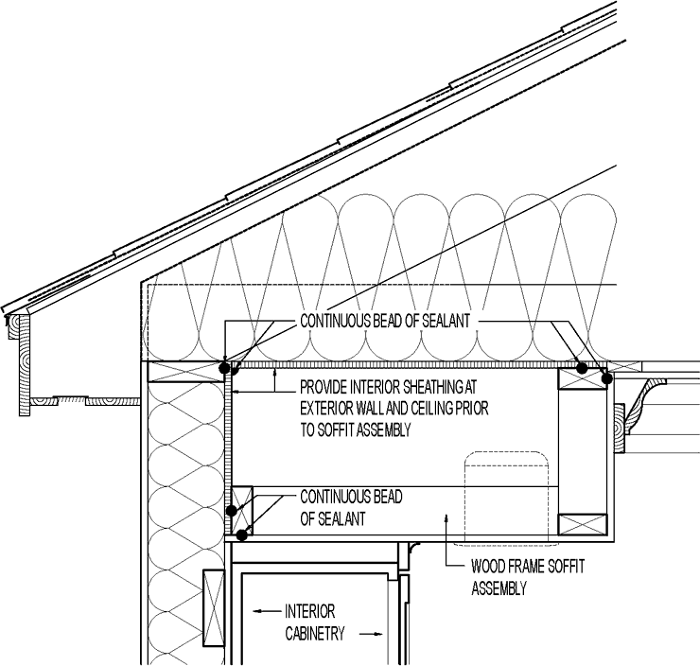
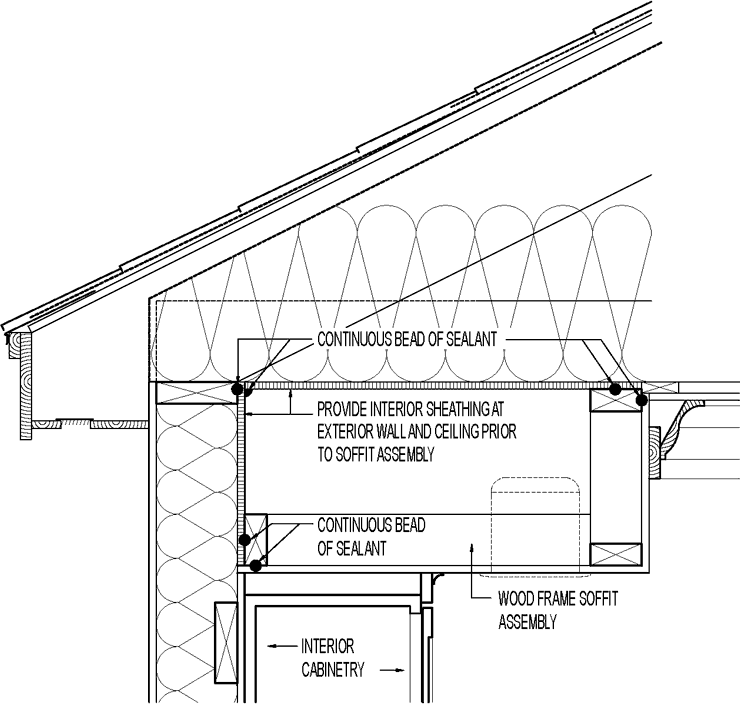
- In soffits above cabinets
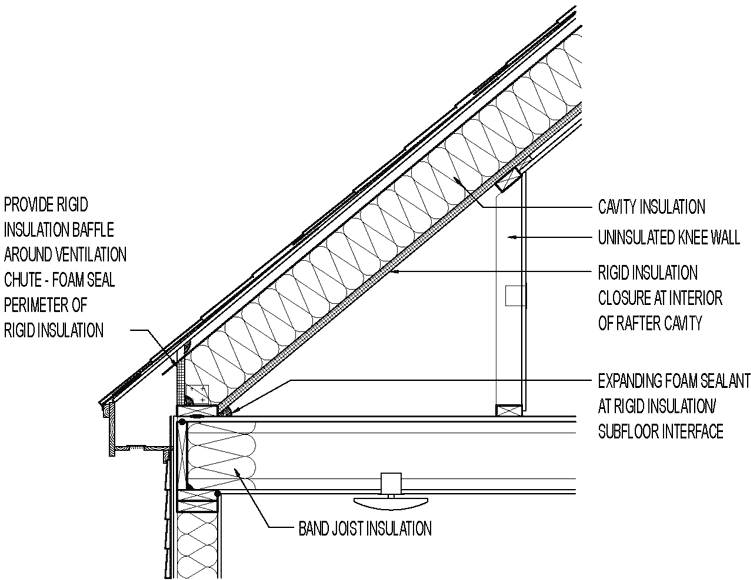
- The connection of knee walls, roof, and floor in a 1-1/2 story house.
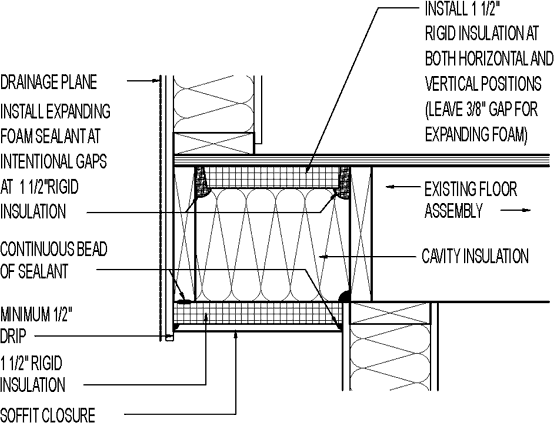
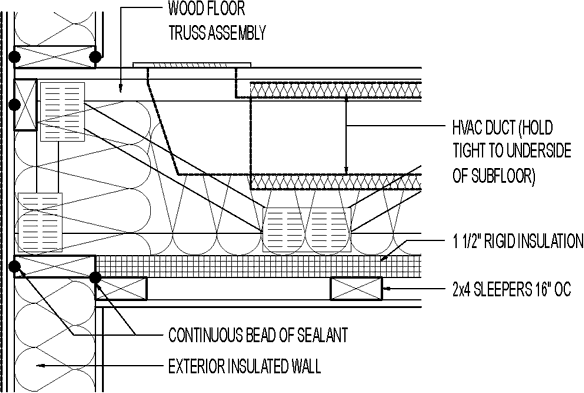
- Cantilevers
Two of these details are highlighted in the newest installment of Energy Smart Details, a back-of-the-book department in Fine Homebuilding magazine written by Martin Holladay.
If you like the lunch pail podcast, give it a positive rating and review at iTunes, or on this blog page.
-
Soffits can connect walls and ceiling framing cavities. Air can leak through can lights to literally suck heat (or air conditioning) out of a house.
-
Cantilevers are often leaky spots in houses.
-
Knee walls in 1-1/2 story houses, such as capes, can be a difficult place to insulate ands air seal tightly.
-
The connection between a garage and living space can be more than an energy efficiency issue. Chemicals and carbon monoxide can leak into living space significantly raising health risks.
-
Tubs are often installed a long time before the drywall is installed. Rarely so builders install drywall or thin-profile sheathing to seal the air leaks.















View Comments
Is it my computer or is this Podcast a verbal presentation only? If there is supposed to be video with this I am not seeing it??
If it is only verbal....it is frustarting that I can not click on any of the other Drawing Details to refer to the situations that are being discussed.
It sounds like good info but the presentation is not working for me. Plese let me know if it "operator error".
Thanks!
It is an audio podcast, Jon.
You can click any of the small thumbnail drawings to enlarge them into the main window.
Once the drawing is in the main window, you can click it again to make it even bigger.
Dan
No Audio or Video
It would be nice if the audio was available in something other than apple quicktime. Many people don't use it...