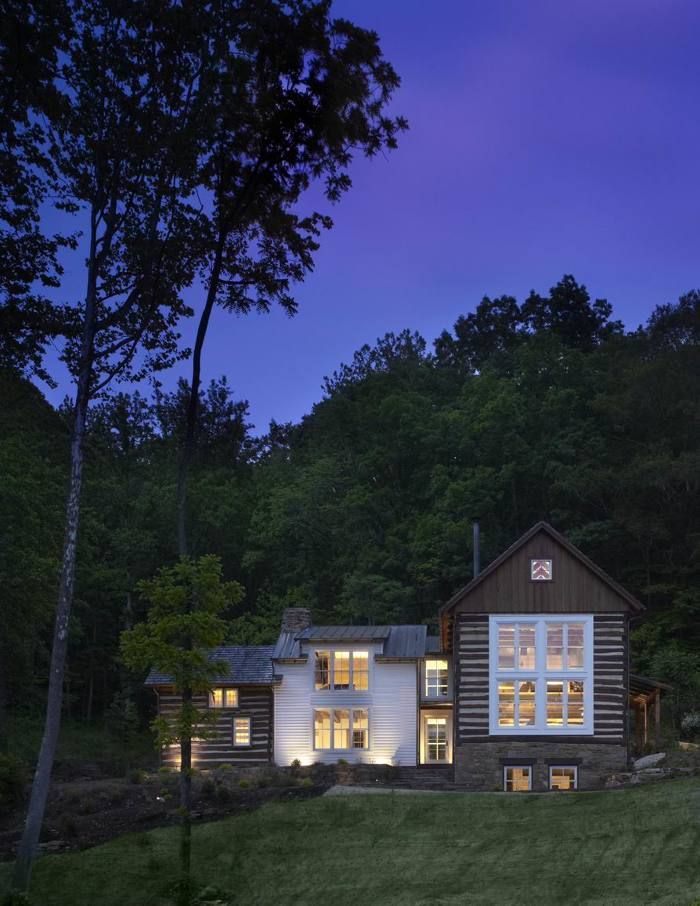
Nestled into the western slope of Jobber’s Mountain in northern Virginia sits the Hazel River Cabin, a home designed by Washington D.C. architect David Haresign. When David submitted his project for consideration in our annual HOUSES issue, I knew right away that we had come across a home that was unlike any other. Staffers Brian Pontolilo and Maureen Friedman had similar reactions when they saw the project, which is a careful assembly of historic cabins that have been reinterpreted into a modern home.
In fact, the project was so unique that it didn’t seem quite right to publish it in a regular article. Instead, we chose to feature it on the back cover of our March issue as Maureen Friedman’s piece “Linking logs.” I spoke with David last week to get some better insights into his design process. Here, in his own words, he takes us through the Hazel River Cabin.
Not everyone is in the position to combine a 218-year-old toll keeper’s cabin with a 156-year-old addition and a 172-year-old chestnut cabin to make a new home. However, David’s approach highlights design lessons that are valuable to anyone redesigning an older home to accommodate a contemporary way of living, while striving to acknowledge and respect its original character.
The Program
The client, Joe, initially thought that he had a teardown of two poorly framed buildings. After beginning demolition on the structure, Joe discovered the 1794 toll keeper’s log cabin beneath a layer of wood clapboards. He did some research and learned about the history of the site, the cabin, and the 1856 framed addition. Instead of proceeding with the teardown, Joe hired a local log-cabin-restoration contractor. After Joe and the contractor were in the initial phases of work, and Joe had a better sense of what he had, Joe felt that the lone cabin was too small and cramped with its 7-ft.-6-in.-tall ceilings. The cabin-restoration contractor told Joe about an additional derelict chestnut cabin from 1840, the former slave quarters from Mount Lovejoy Plantation in Howard County, Md., that he could procure and bring to the site. Soon after, he called me.
Joe wanted to use the new home as a retreat. He wanted the design to create a memorable renovation that respects the existing character of the cabins; celebrates the beauty of the logs, wood framing, and stone fireplaces; and incorporates all of the conveniences of a modern home. The space program was simple. The home would need:
- A large modern kitchen that could open into the main living area and a dining room that could comfortably accommodate six to eight people.
- A library, which could double as an additional sleeping area.
- Two bedrooms, each with a private bath.
- A study/sitting area adjacent to the main sleeping area.
- An equipment room for HVAC, boiler, water heater, water treatment, electrical panels with automatic transfer switch [generator], lighting controls, and audio equipment.
The property is in an agricultural trust, and Joe requested that the home’s total area be less than 2,500 sq. ft.
Contextual Modernism
Some may have looked at these cabins and set out to restore them instead of transforming them into something new and different. However, we use spaces very differently than when these cabins were originally constructed, so a traditional restoration simply would not have worked. For restorations, renovations, additions, and adaptive-use projects, I have always applied a simple design principle that I call “contextual modernism.” I aim to add new elements, like modern technology and precisely manufactured components, that respect and celebrate the character of the original structure yet remain clearly contemporary. For example, in this home, the modern elements are not hidden or blended into the old structure in any way. The modern additions, like the steel support beams, stand in stark contrast to the original structure. Steel is a more modern material – clearly from a different period than the log structure – but it also expresses an essential, rough-hewn character that lets the two materials work remarkably well together. This approach to material and finish selection is a result of a set of rules we established to help govern design decisions. Some of our rules included:
- Celebrate the beauty of the logs. There were several species, as cabin builders used whatever was available. Oak, chestnut, and pine were predominant and had survived the test of time.
- Use reclaimed materials as much as possible, either from the existing cabins or from sources in the immediate vicinity. We were able to reclaim 80% of the wood floors.
- Finish each cabin consistently with our interpretation of what might have been.
- Treat new materials and modern elements differently to clearly differentiate them from old ones.
- Express the structure honestly, so leave beams, joists, and new supports exposed.
[[[PAGE]]]
A Cohesive Design
Each part of the new home has its own specific language or code. While that might sound a bit ethereal, it was an important idea that needed to be understood in order for the project to be successful. All of the structures, from the roughest (the original 1794 log cabin) to the intermediate (the 1840 chestnut cabin) to the most refined (the 1856 frame addition) to the most current (the 2009 modern addition), have their own unique attributes. Instead of meddling with the elements in an effort to create a home with a universal feel from space to space, which would have been an entirely too literal form of cohesive design, we embraced and showcased the contrasting elements. The differences in these spaces and materials, which can be quite severe in certain instances, helped create a clear composition. Walking through the home, an observer can easily understand the age of each space and its relationship to the present and to the past.
SPECS:
Size: 2,400 sq. ft.
Bedrooms: 2
Bathrooms: 2-1/2
Design: David Haresign, Bonstra/Haresign Architects (www.bonstra.com)
Builder: Greg Foster, Timberbuilt Construction (www.timberbuiltconstruction.com)
Photography: Anice Hoachlander (www.hdphoto.com)
-
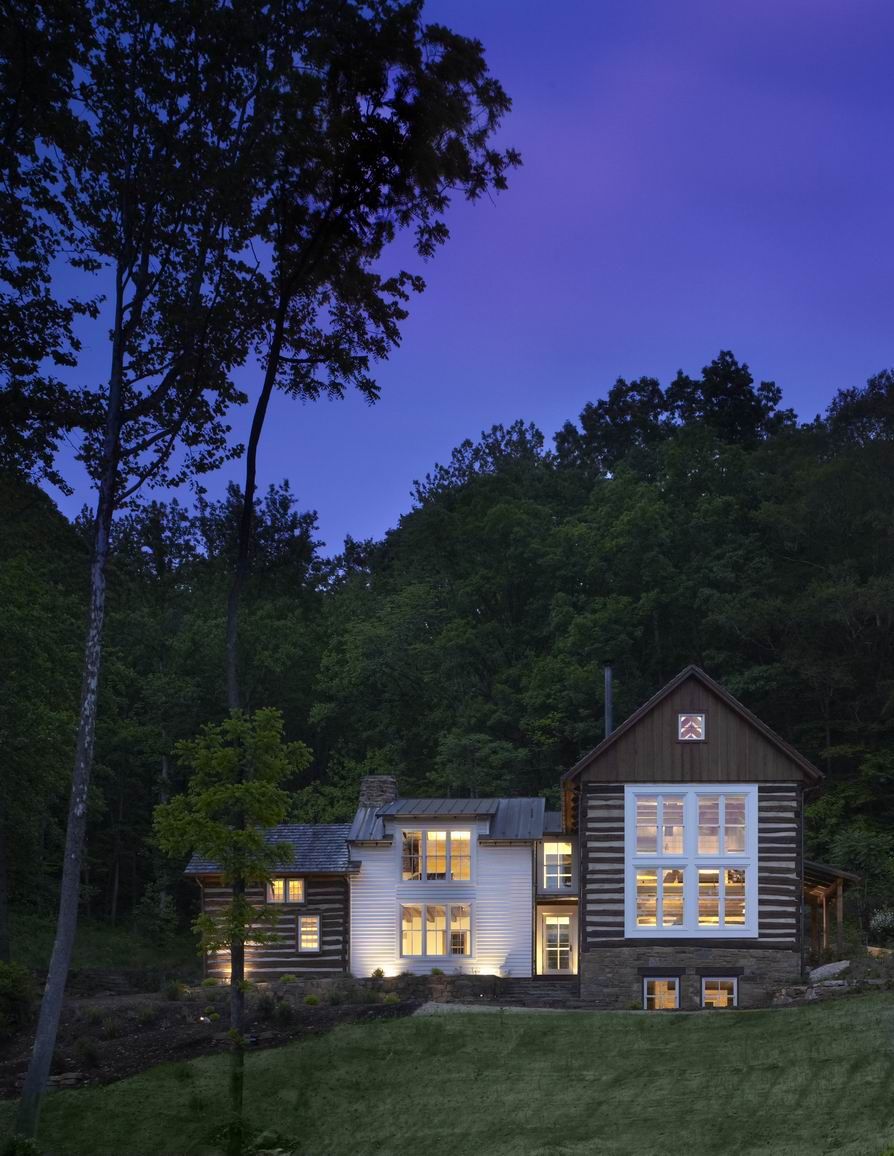
The western facade of the home. The original 218-year-old toll keeper's cabin sits to the left of its 1856, white clapboard-covered addition. The former chestnut slave quarters, with its western facing gable, is joined to the 1856 structure with a narrow, modern addition made mostly of glass.
-
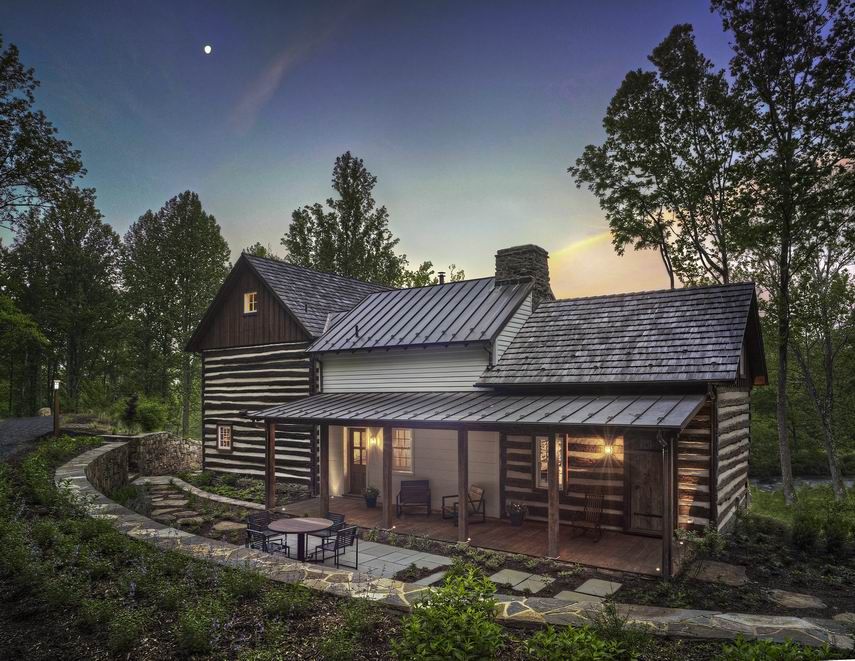
The 1794 and chestnut log cabins are roofed in irregular cedar shakes, which are likely consistent with the roofing material used at the time of their construction. The 1856 frame addition is covered with standing-seam metal roofing, which was also a likely roofing option in the 1850s. Porches, which would periodically fall apart, had their roofs covered in standing-seam metal as well.
-
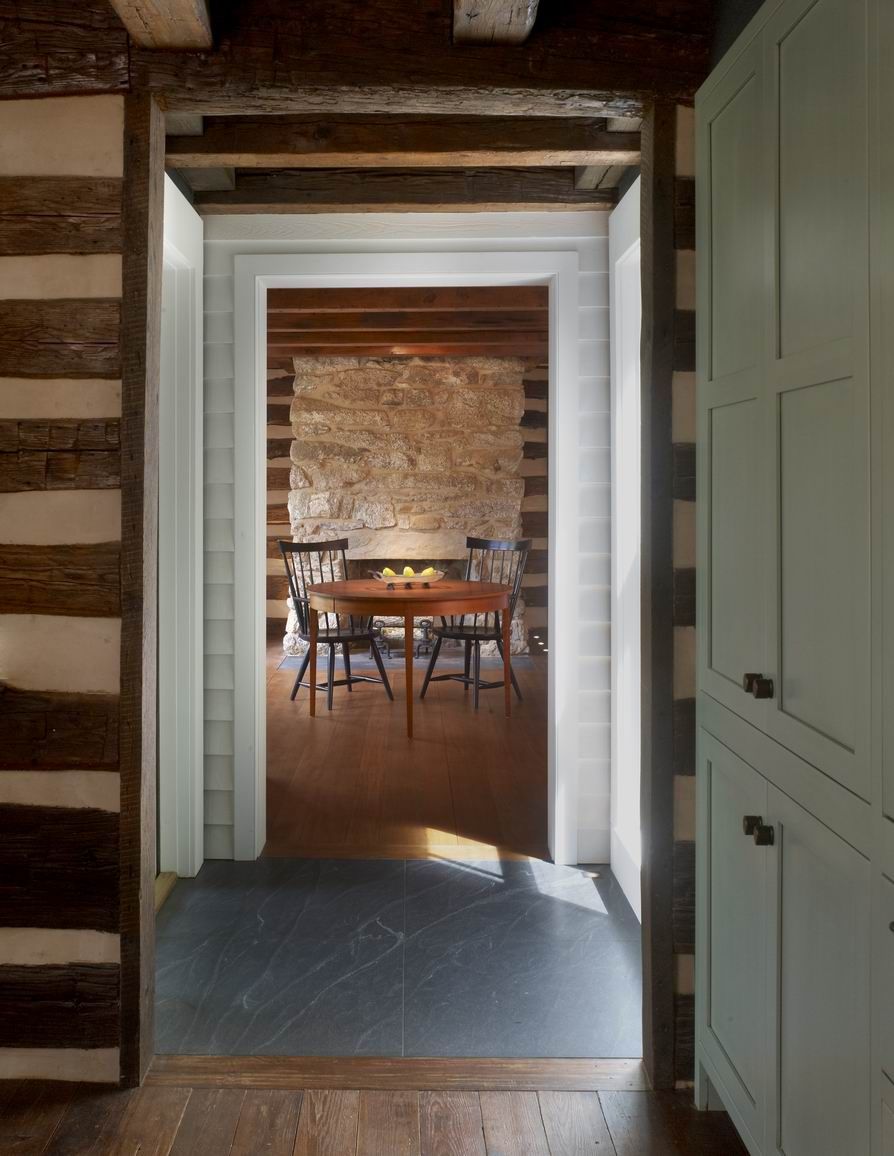
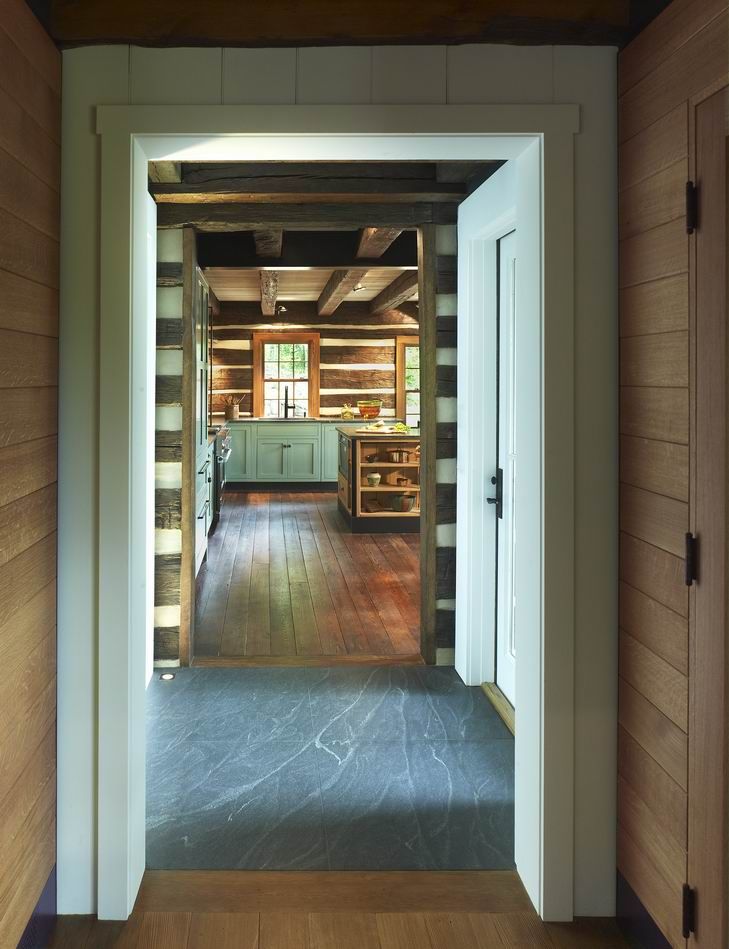
Looking through the modern addition that links the chestnut cabin and the 1856 addition. This slender addition, which connects the kitchen to the dining room, has a floor made of "Honed Jet Mist" granite. David wrapped the painted cypress clapboards into the space to create a definitive boundary between the old addition and the new one.
-
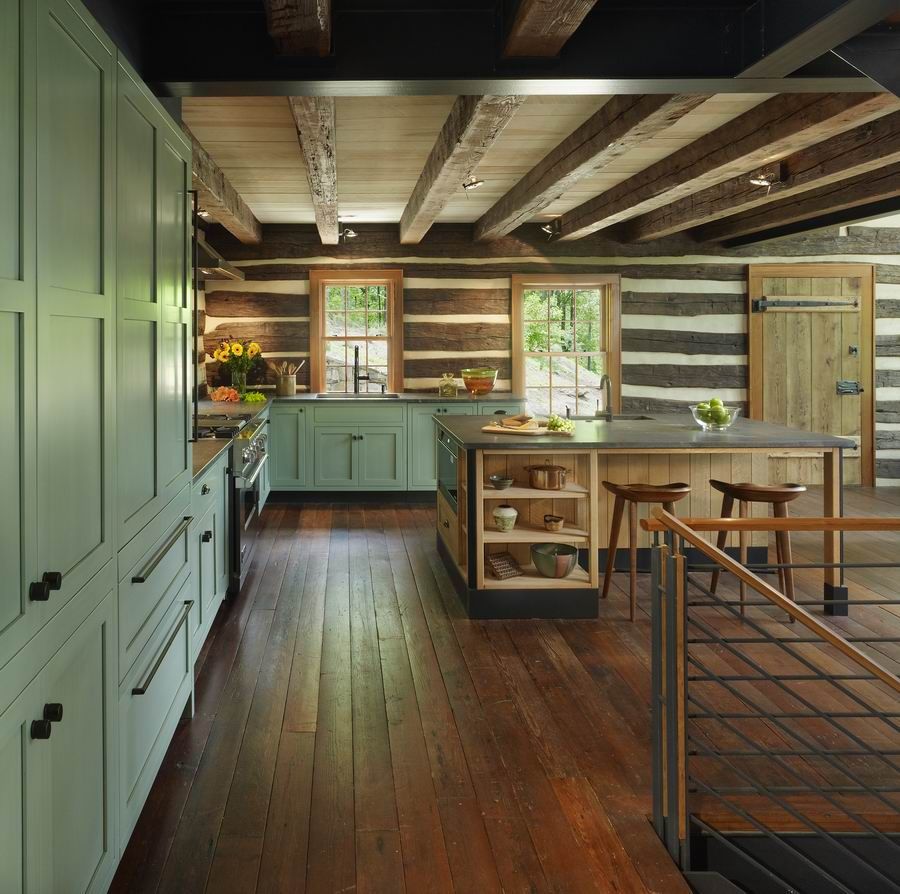
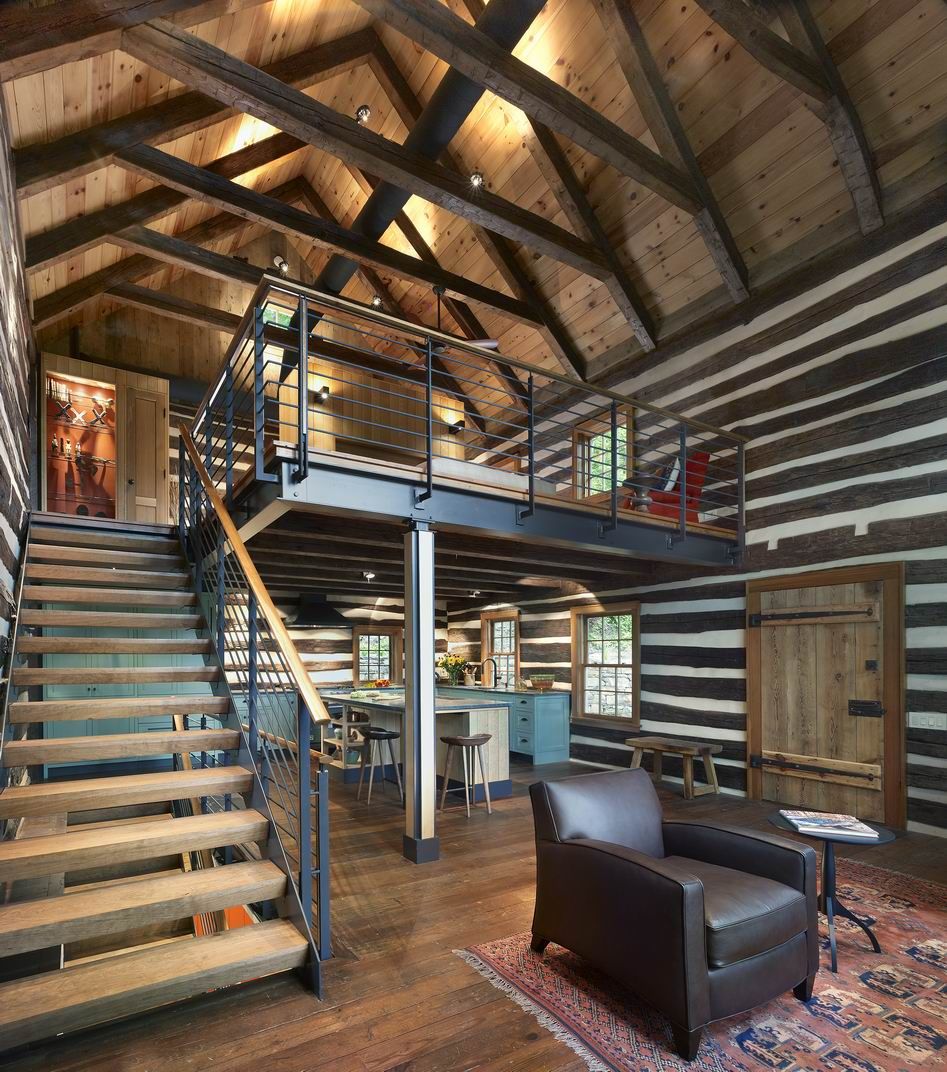
The kitchen is placed beneath the lofted bedroom and opens onto the main living space. Reclaimed floor boards sit beneath custom cabinets and an island topped with honed granite.
-
Looking through the 2009 addition from the dining room into the kitchen. Notice the exposed hewn logs on this end of the new space. The distinction between structures, which span more than 170 years, is deliberately crystal clear.
-
Steel I-beams allow for as much clear space beneath the bedroom as possible. The fabricated steel has a rawness that complements the hewn logs. The steel railing, which mirrors the chinking in the walls, is a reinterpretation of local cattle gates. Cherry is used as stair treads and post inserts.
-
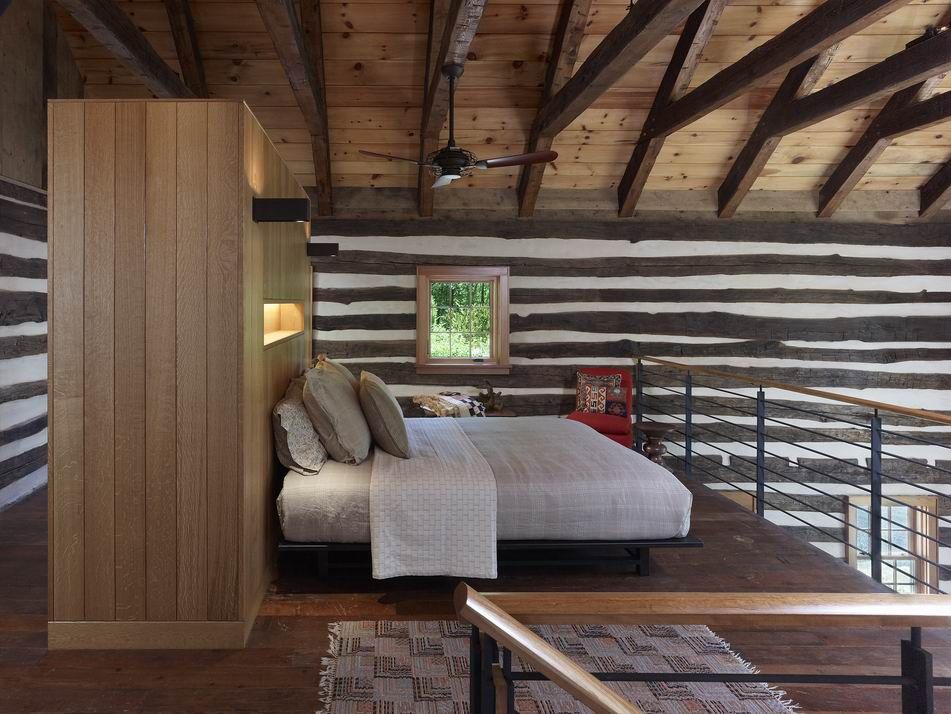
The bedroom over the kitchen. The custom headboard serves double-duty as built-in cabinetry. It sits independently in the space and is made of new material, instead of old reclaimed material, to distinguish it from the original cabin.
-
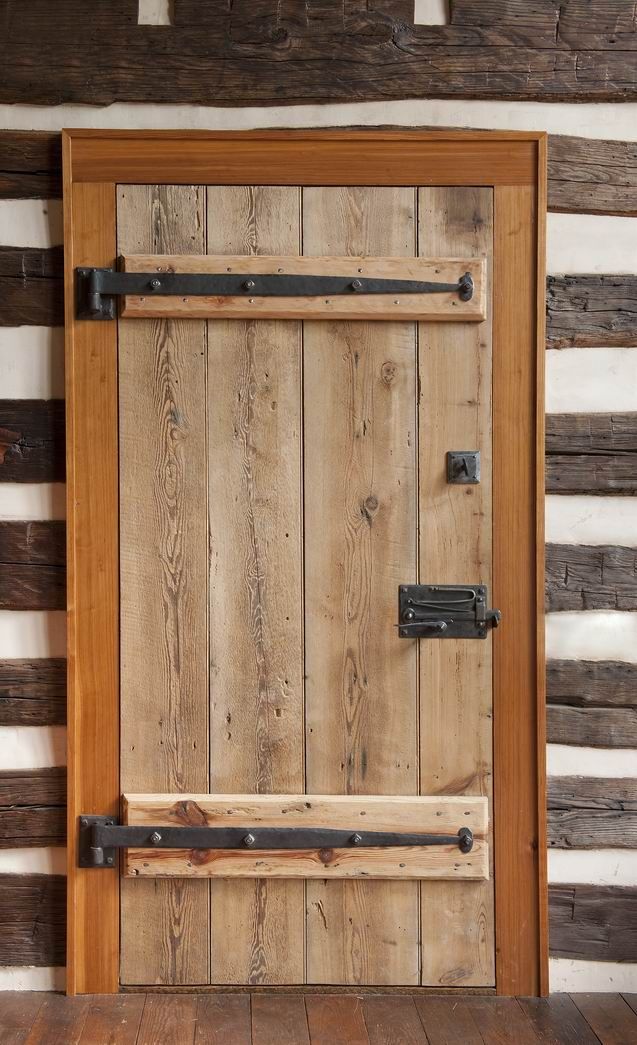
The hardware for the main door is made locally. The door latch, with its simple exposed latching mechanism, sets the entry apart.
-
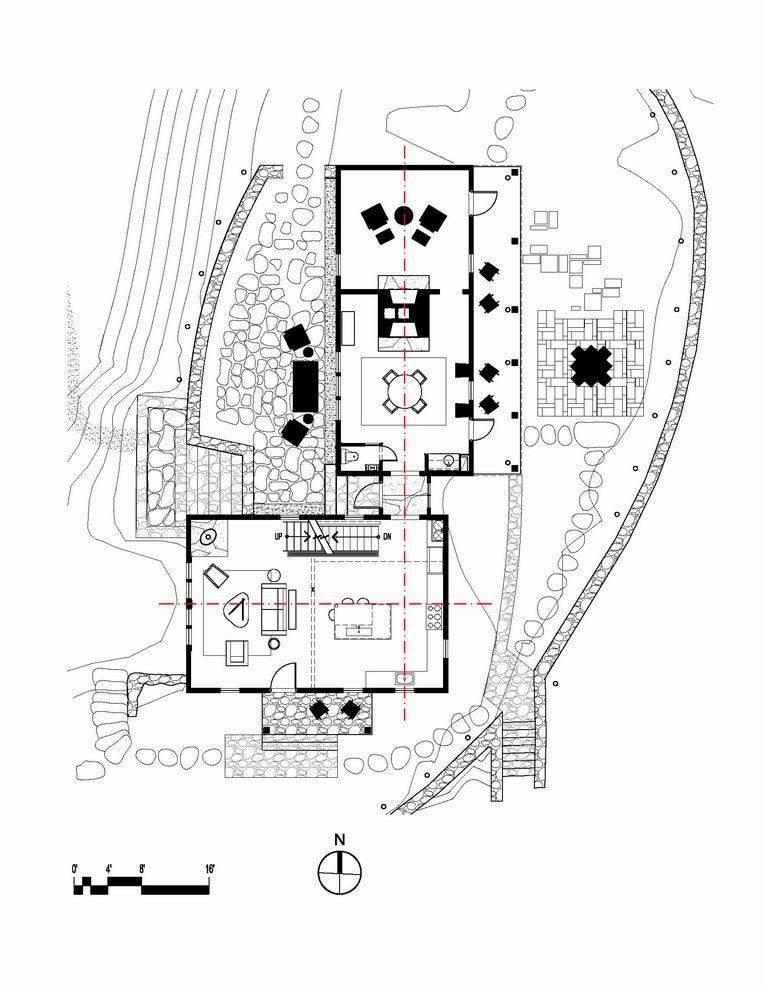
This floor plan shows the locations of the kitchen and living spaces in the chestnut cabin, the dining room in the 1856 addition, and the library in the old 1794 toll keeper's cabin.
-
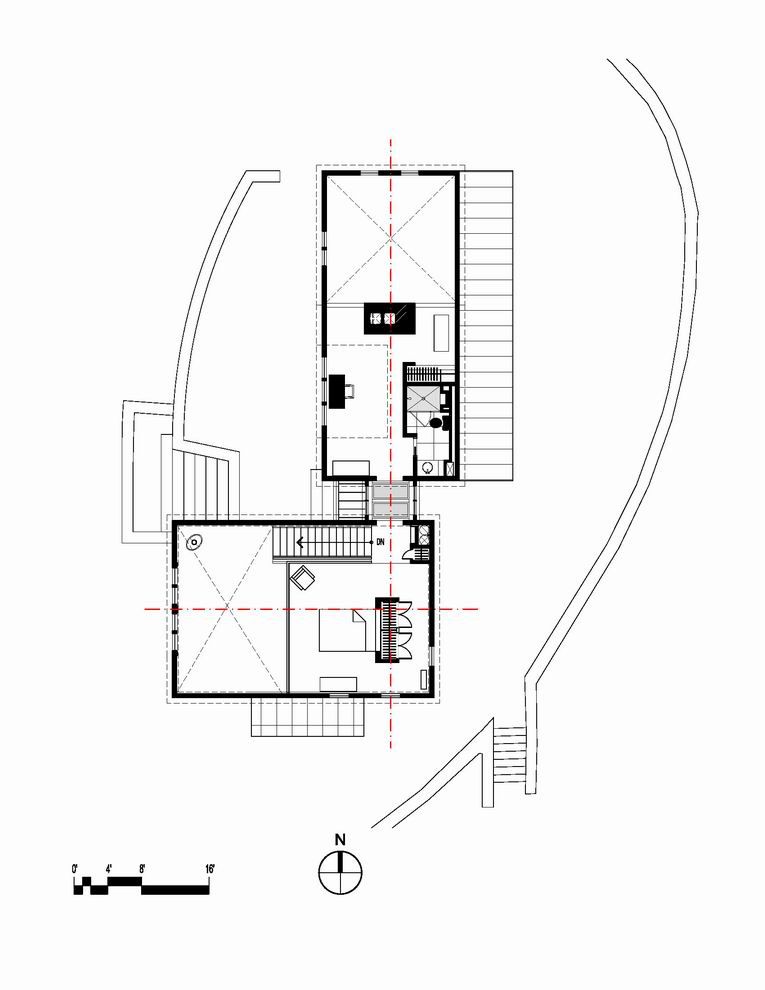
This floor plan shows the arrangement of the second-story living spaces. A lofted bedroom sits to the south of a study.
-
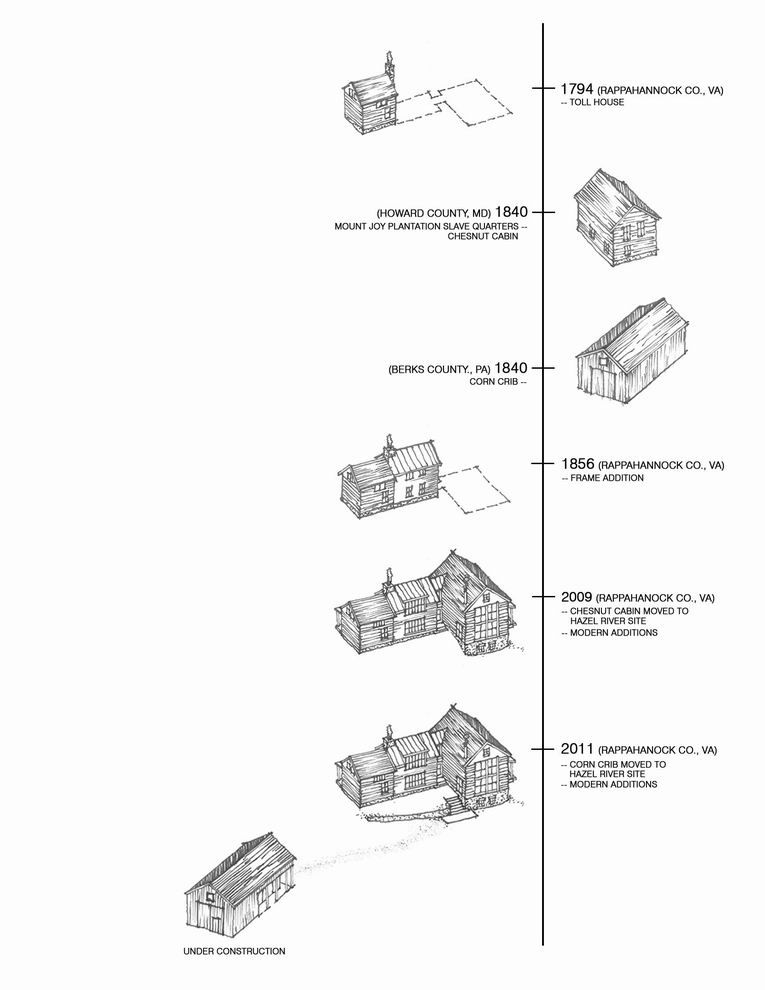
This timeline shows the origin and construction dates of all the structures used to create the Hazel River Cabin. A corn crib, which is currently on site, will eventually become a pool house.
-
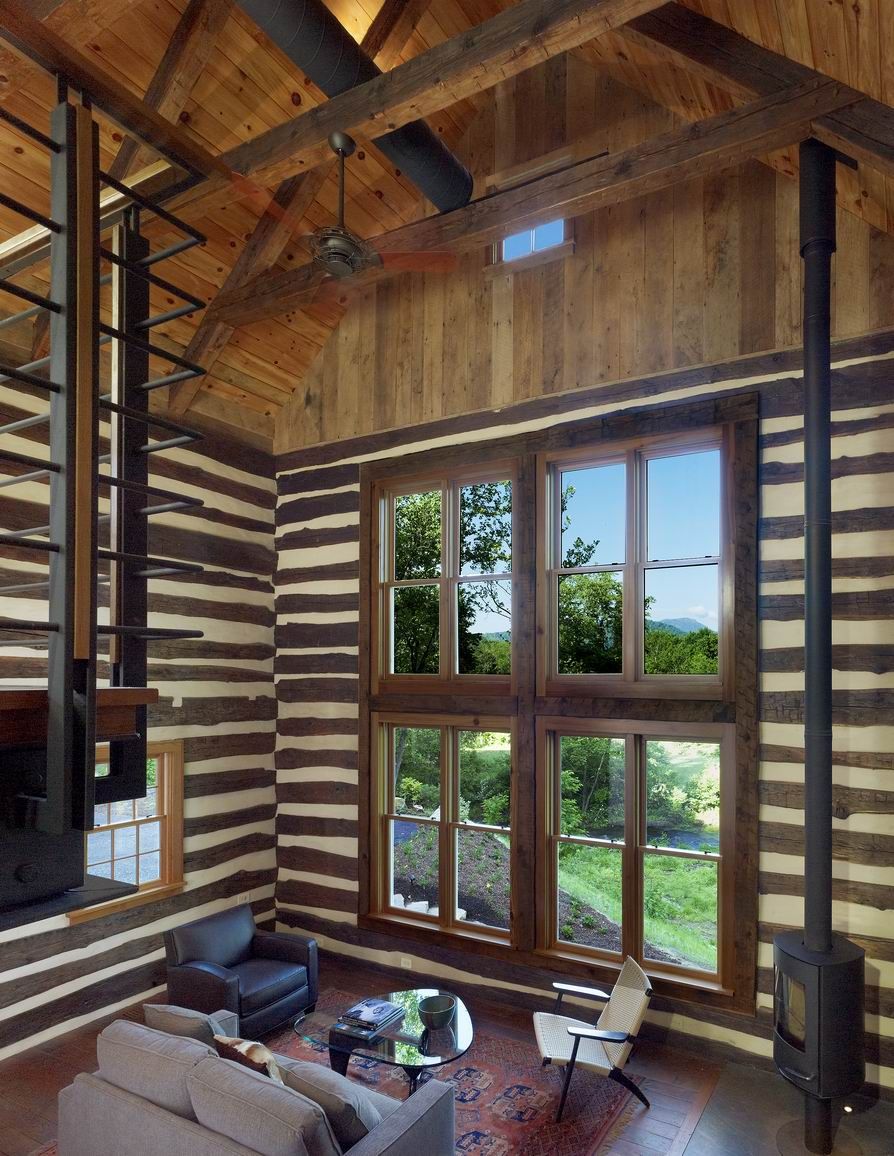
The living room looks out to a view of Old Rag Mountain through semi-custom Eagle windows by Andersen. Most of the units in the home replicate windows of historic proportions. These units were arranged as a reinterpretation of divided-lite windows. A modern Wittus Trendline woodstove stands in the corner with minimal connection to the old cabin structure.