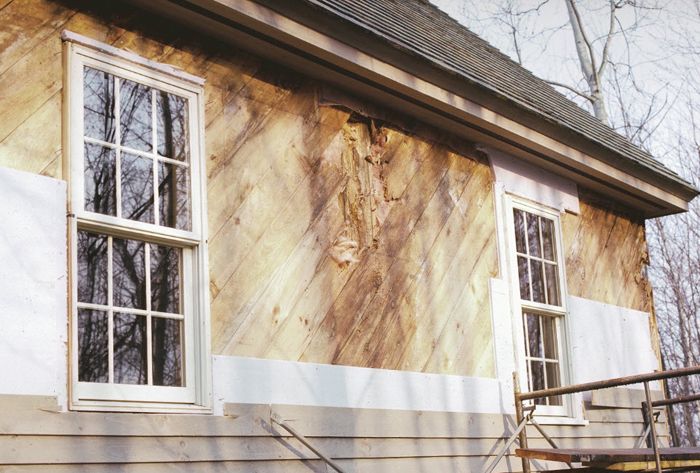
Few building science topics have been hashed over in as much detail as the use of a polyethylene vapor barrier (or, more properly, vapor diffusion retarder). But the complex dynamics of moisture movement inside building cavities continues to prompt questions.
Writing from Chicago, Ed says he understands that the improper use of a vapor barrier can prevent walls from drying out and, as a result, promote mold and rot. But in a Q&A post at GreenBuildingAdvisor, Ed poses the question in reverse: Will the lack of a vapor barrier lead to problems when the house is built with standard construction techniques and no special efforts to make it airtight?
As is often the case, there’s more than one way of approaching the subject.
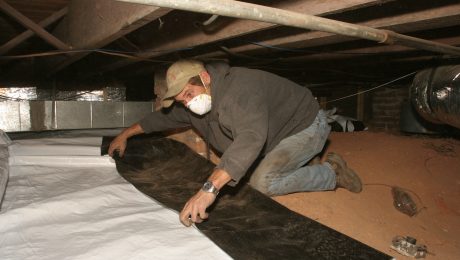
Even though poly vapor barriers are installed far less frquently than they once were, they’re still a proven way of keeping moisture out of the walls as long as they’re installed correctly, says one reply to Ed’s query.
Others would argue differently, suggesting that poly is not suited to Chicago’s climate and that better strategies are available for controlling moisture in walls and ceilings.
That debate is the subject of this month’s Q&A Spotlight.












View Comments
Thanks for this post.you might be interested in checking out fine luxury homes by Brejnik Fine Homes (www.brejnik.ca). They build fine luxury houses. Brejnik team consists of qualified and trusted: Architects, Interior Designers, Appraisers / Lenders, Trades & Suppliers, Geo-technical engineers, Structural Engineers, Arborists, Landscape Architects, Pool & Water Feature.
Have client ,who's house was built in 80s inside poly vapor barrier installed on cinder block wall then studded. Builder then placed fiberglass insulation in between 2/4 wall studs . Home built on slope moister on inside of vapor barrier . Only on of course walls below grade. Moisture does not drain onto basement floor and no mold on fiberglass . No heat in basement ,but he would like to make in to living space. What can I do to keep moisture out. He would like drywall installed. They also installed fiberglass insulation on 7'5 ceiling .