How to Choose the Right Sandpaper
Learn the pros and cons of the 3 common abrasive materials to pick the type of sandpaper that best matches your project.
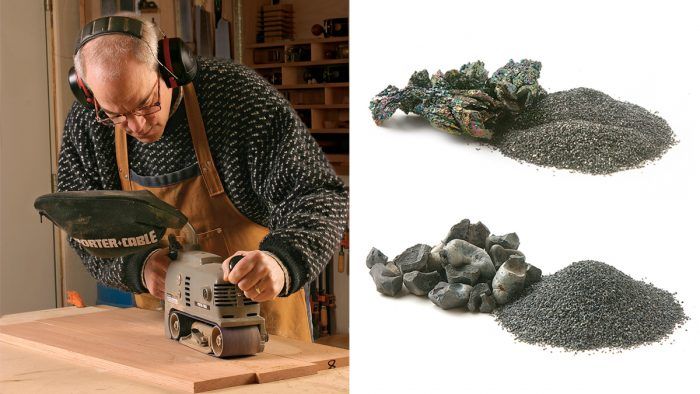
A lot of different trades use sandpaper. From trim carpenters to fine woodworkers, painters to auto body mechanics, there’s regularly a need to smooth a rough surface. Yet we don’t all use sandpaper the same. A trim carpenter may reach for a piece of 120-grit paper to quickly flatten a slightly offset miter joint, while a painter, spraying a catalyzed finish on cabinetry, may sand meticulously between coats with 400-grit or higher to make the finish as smooth as glass. How you fold sandpaper matters (and some carpenters swear by sanding blocks), but choosing the right type of sandpaper for your project matters, too. Let’s take a look at the different materials manufacturers use to make sandpaper and to see which work the best for different tasks and which last the longest when used to sand various materials.
Although manufacturers still use a few natural minerals, such as garnet, synthetic abrasives coat most of the sandpaper we buy today. Manufacturers have concentrated their new-product development on aluminum oxide and newer ceramic abrasives, designing abrasive grains that are friable or semi-friable, meaning they break down to expose fresh cutting edges as the sandpaper wears. This friability rejuvenates the points, so it extends the life of the sandpaper. It also produces a more consistent scratch pattern than a non-friable material.
Most sandpaper for woodworking has an open coat, meaning that abrasive grains cover between 40% and 70% of the backing. The space between grains gives sawdust a place to go so that the paper doesn’t clog as readily. On the other hand, closed-coat sandpaper produces a more uniform scratch pattern, making it a good choice for sanding finishes. To see how different brands of sandpaper stack up, see “Torture Test: Sanding Disks,” FHB #221 or at FineHomebuilding.com.
Aluminum oxide
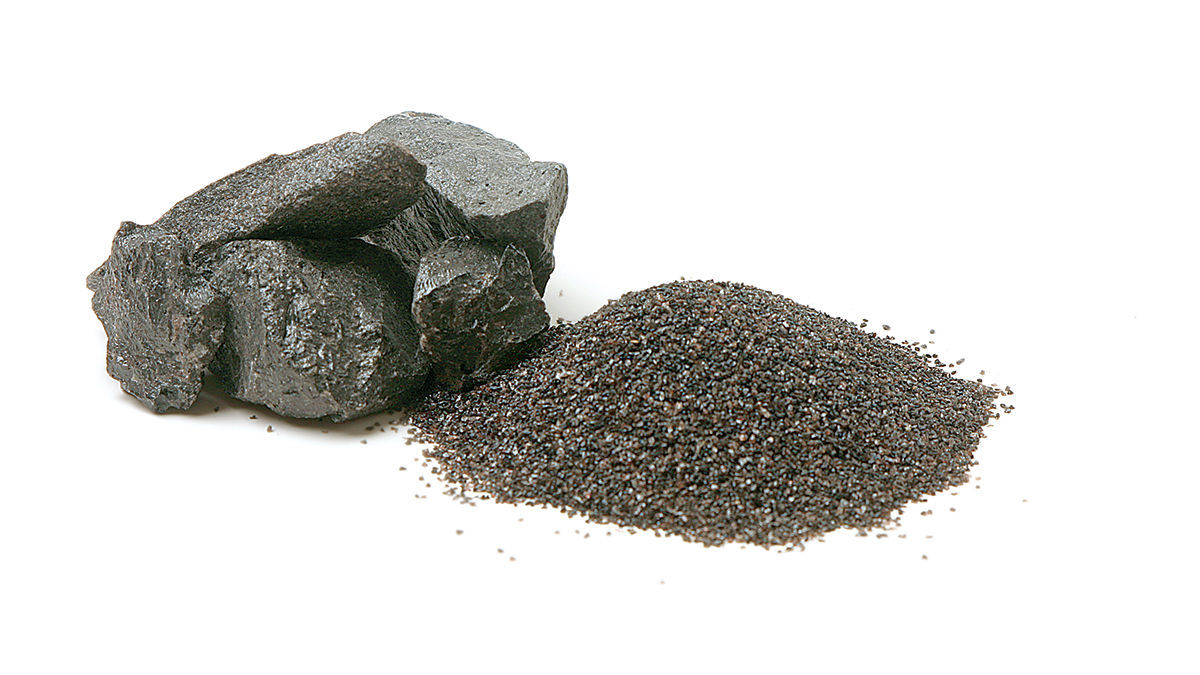
Aluminum oxide is the most common abrasive used on sandpaper. It works well on a number of materials, including bare wood, painted surfaces, and metal. In its most basic form, this furnace-produced mineral does not fracture easily. Instead, it tends to wear down until it becomes too dull to cut efficiently. More expensive forms are friable or semi-friable. A number of companies offer more than one grade of aluminum oxide in sandpaper. More expensive, heat-treated versions of the mineral tend to go into higher-priced product lines. With its familiar brown and black flecks, generic aluminum oxide is used in tandem with hide-glue adhesives on less expensive sandpaper.
Silicon carbide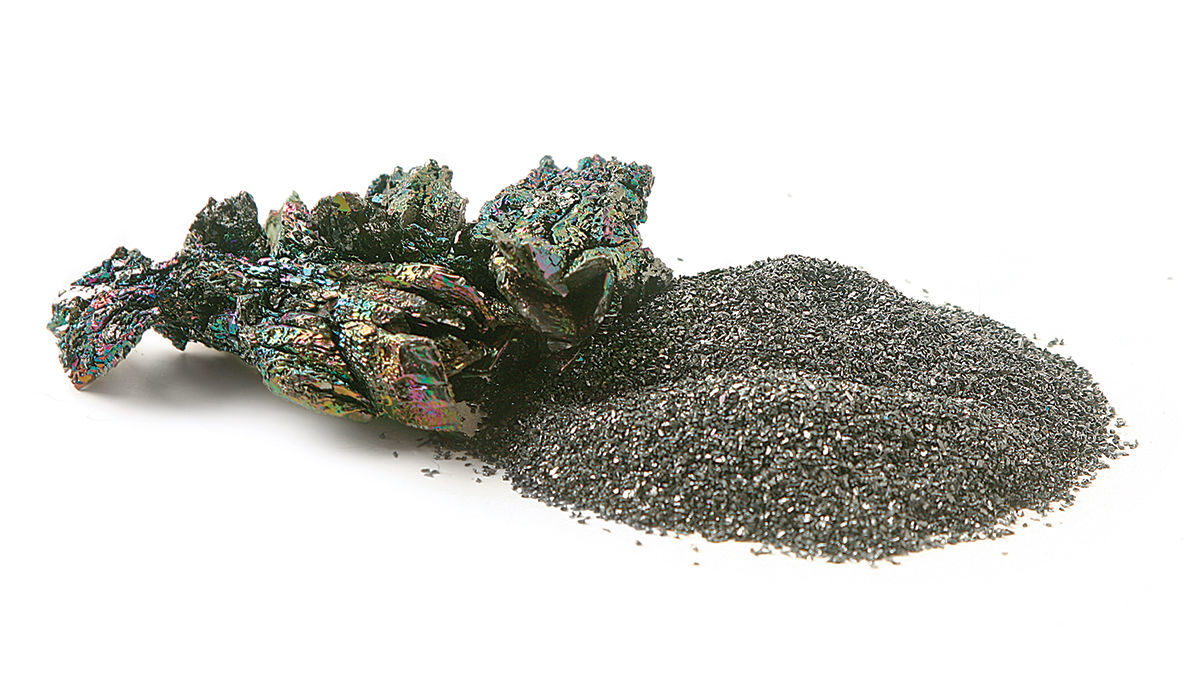
Silicon carbide is sharper and harder than standard forms of aluminum oxide. It has needle-like grains that resemble shards of broken glass. These hard, sharp grains cut glass, plastic, and metal well under light pressure, but silicon carbide is not a tough mineral. Its elongated shape shears off easily, making it too friable for bare-wood sanding because the abrasive wears down too quickly, according to manufacturers. It is, however, an excellent choice for smoothing a finish between coats and for rubbing out film finishes like lacquer and shellac, because it cuts quickly and produces a uniform scratch pattern. Also, waterproof versions won’t degrade when used with water or oil. For these reasons, it’s also most commonly found in fine grit rather than coarse.
Ceramic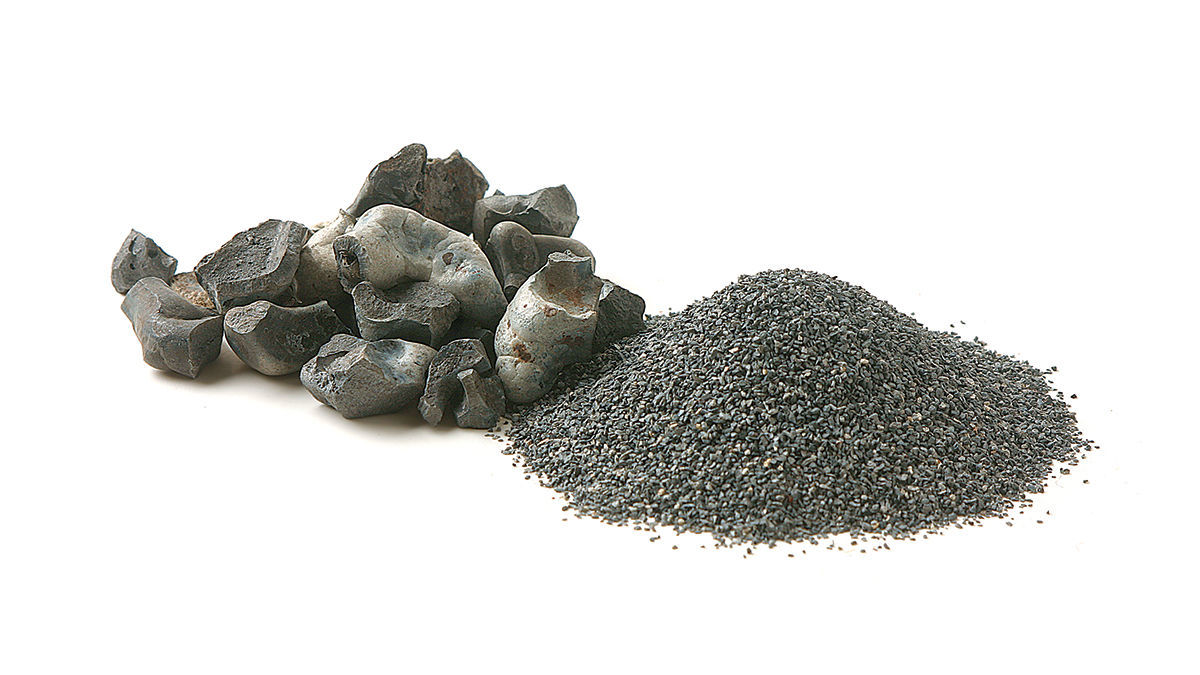
Ceramics are extremely tough, sharp, and long-wearing—and at least several times as expensive as anything else. They are not friable and do not renew their cutting edges when sanding wood. They also don’t dull as quickly because of their extreme toughness. This makes them the best choice for hogging off stock, roughing out shapes, removing finish, and leveling uneven boards. For this reason, ceramics are generally available only in coarse-grit cloth belts for stationary and portable sanders. They often are blended with other abrasives on premium belts and disks, and are branded with a special name. For instance, alumina zirconia, a tough alloy of aluminum oxide and zirconium oxide, is easy to mistake for a separate category, but it’s actually a ceramic abrasive.
Photos: Andy Engel