previous
  • The Inspector Game: Goofs on a Roof
    The Inspector Game: Goofs on a Roof
  • Wanted: Plumber for a Bathroom Remodel
    Wanted: Plumber for a Bathroom Remodel
  • 7 Small Bathroom Layouts
    7 Small Bathroom Layouts
  • How to Avoid Complicated Fractions
    How to Avoid Complicated Fractions
  • Your Guide to Energy Smart Homes
    Your Guide to Energy Smart Homes
  • Seven Steps to Choosing the Perfect Circular Saw
    Seven Steps to Choosing the Perfect Circular Saw
  • Fine Homebuilding: The Digital Issues
    Fine Homebuilding: The Digital Issues
  • Protecting a SIPS Roof from Decay
    Protecting a SIPS Roof from Decay
  • How To Make a Reciprocating-Saw Blade Guide Block
    How To Make a Reciprocating-Saw Blade Guide Block
  • Top 10 Videos of 2011
    Top 10 Videos of 2011
  • How to Figure Out Concrete Volume with Sketchup
    How to Figure Out Concrete Volume with Sketchup
  • VIDEO: Stop Paint from Bleeding
    VIDEO: Stop Paint from Bleeding
  • 10 Basement-Remodeling Tips and Techniques
    10 Basement-Remodeling Tips and Techniques
  • Replacing a Roof : Installing a Ridge Vent
    Replacing a Roof : Installing a Ridge Vent
  • Patrick's Barn: A Perfect Place for a Party
    Patrick's Barn: A Perfect Place for a Party
next

Nailing clapboard siding: top, bottom, or both?

Q: The builder of my house nailed the top and the bottom of each cedar clapboard. Won’t this cause the boards to split?


Paul Covganka, via email


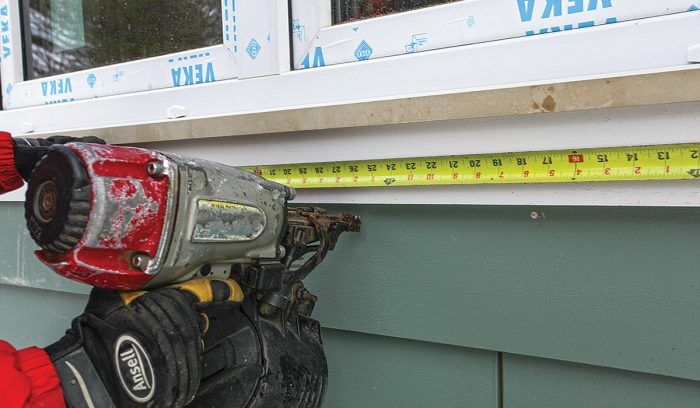
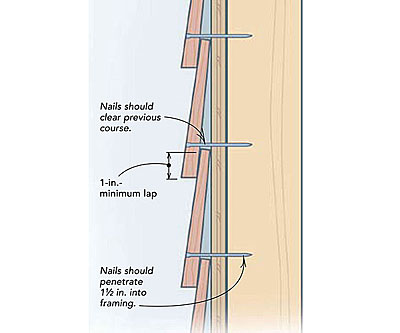
A: Associate editor Daniel S. Morrison replies: Normally, you nail either the top of the siding or the bottom of the siding, but not both. The main reason for nailing the top of the board is to hide the fasteners, but nailing the tops leaves the bottoms a little loose, giving bugs possible entry points. Nailing the bottoms allows for easy removal and secures the top of the lower board. Nailing both top and bottom is unnecessary and, in fact, may cause splitting, as you point out. When nailing the bottoms of clapboards, make sure to keep the nail high enough from the bottom to clear the top of the previous siding course.


From Fine Homebuilding 177, pp. 128 March 1, 2006