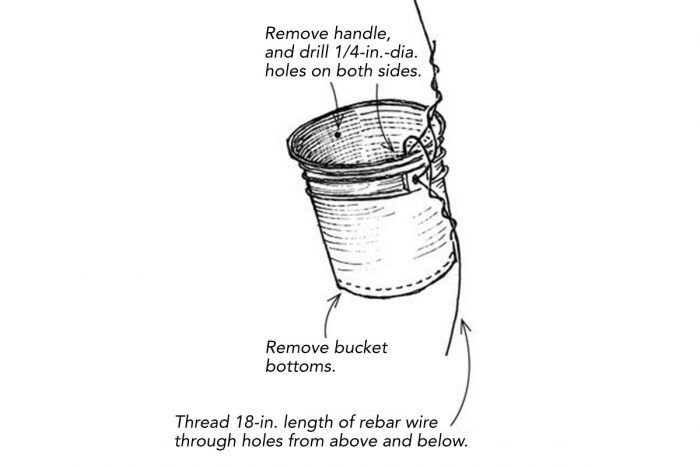
I needed a chute to funnel demolition debris from a second-floor bath to a Dumpster. On this job, the debris consisted of concrete chunks and tile from an old-style mortar-bed job. I thought about big construction sites with the long, flexible debris chutes that snake down the side of the building into Dumpsters and decided to make a smaller residential version.
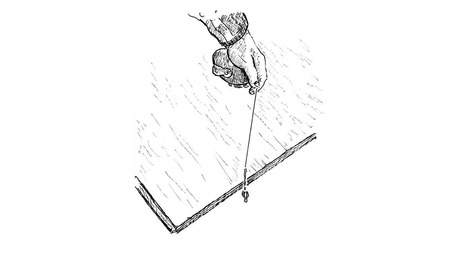
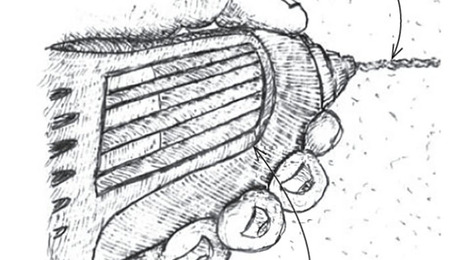
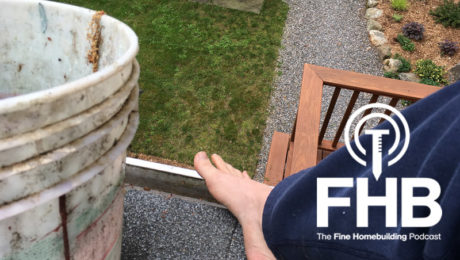
I modified some empty 5-gal. drywall-compound buckets to make the chute. First, I removed the handles. Where the handles had attached, I drilled 1/4-in. holes in the bucket. Then I removed the lower 1/2 in. of the bottom of each bucket. This is important because you don’t want a lip left to catch debris as it falls through the chute. Then I used 18-in. lengths of rebar tie wire to link the buckets together. Here are some important points to remember:
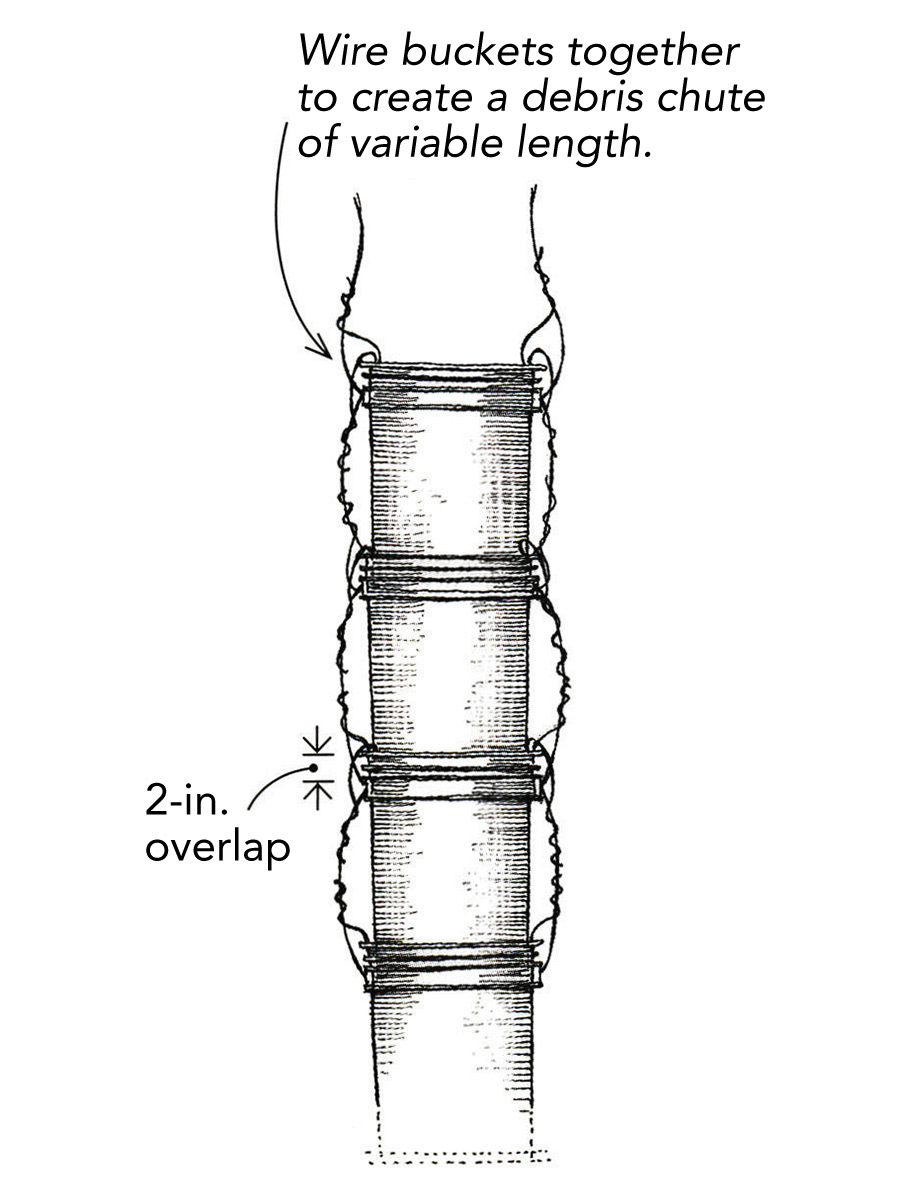
• If the chute is straight, a 2-in. overlap works fine. If it curves, increase the overlap.
• It’s easier to add to the top of the chute than the bottom.
• Building a debris chute takes a fair number of buckets, but you can use old ones that are dirty, cracked, broken, or handleless. It’s a good way to put empty buckets to good use and keep them out of a landfill.
• To use the chute, add two more wires to the top, but instead of adding a bucket, tie the wires to the window frame or some other place on the construction site.
• Attaching the top of one bucket to the top of the one below it allows you to store the buckets in a tight, nested stack. Twist them a bit as you collapse them into storage mode.
Jim LaGrotta, Boonton Township, NJ
Edited and Illustrated by Charles Miller
From Fine Homebuilding #188















View Comments
Here's what we came up with for a no-cost debris chute made from available materials: http://cashcrone.com/2016/05/the-eleven-diy-debris-chute/#sthash.RqFH8xAq.dpbs You can watch the video that shows it in action!
CashCrone - NOT a valid link. Possibly a spam post?