
What’s the Difference Between Shakes and Shingles?
Size and manufacturing processes are the main distinguishing characteristics of these two popular siding materials.
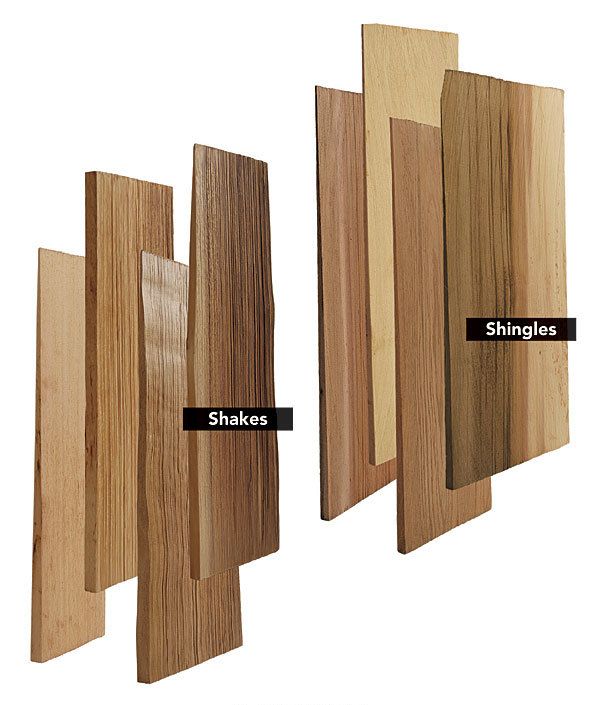
Q:
Your June/July 2011 issue (FHB #220) had a great article on siding repairs. I was confused, however, by the use of “shakes” on the cover when the article refers to “shingles.” Isn’t there a difference between the two?
Larry Phillips, Annapolis, MD
A:
Mike Guertin, a remodeler from East Greenwich, Rhode Island, responds: As the author of that article, I was disappointed to see “shakes” on the cover. While many people use the terms interchangeably, shingles and shakes are not the same. Here’s the Cedar Shake & Shingle Bureau description: “Generally, a shingle is sawn on both sides and is thinner at the butt than a shake. A shake is typically split on one or both sides. … Shakes are still manufactured by hand, but most are now made using powered equipment. Certi-Split shakes are made by taking the wood straight split from the block, and sawing it end-to-end at an angle. This creates a shake that is sawn on one side and split on the other, often called a ‘handsplit and resawn’ product. Medium shakes are shakes that measure nominal 1/2 in. at the butt. Heavy shakes are shakes that measure nominal 3/4 in. at the butt.”
Other differences also occur due to the fabrication processes. Being sawn, shingles exhibit some cross grain due to cutting, whereas shakes, being split, follow the grain more closely. For the same reason, shingles are more uniform than shakes. (For more on shakes and shingles, see “What’s the Difference?” in FHB #185 or at FineHomebuilding.com.)

View Comments
Had a question for you. What are your thoughts on Waldun Cedar https://www.cedarroofing.com/waldun-cedar-shake-shingles/