
Keeping chisels and other edge tools sharp is a habit that I insist all our crew members develop, and I’ve found it to be a valuable lesson for new members in boosting morale, promoting safety and teaching skills. Here’s our low-cost system for ensuring that we have a constant supply of well-honed tools available at all times and for designating who is qualified to use them.
Dull, nicked or chipped chisels (also drill bits, planer knives, etc.) are deposited in a special drawer in the service body of one of our trucks. They are collected on a weekly basis and sharpened on my Delta sharpening center by me or another qualified employee. This task takes about 1-1/2 hours per week by an experienced operator and keeps 25 employees equipped with sharp tools.
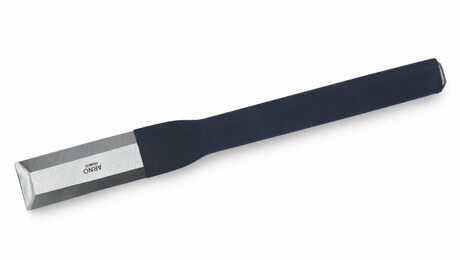
After they are sharpened, the tool surfaces are cleaned with solvent to remove the sharpening compound and allowed to dry. Then they are dipped briefly into a can of liquid electrical tape, a liquid plastic readily available in many colors. I dip the blades to a depth of about 1/2 in. above the sharpened area, sealing out moisture and dirt. The plastic dries in about 15 minutes. The coating comes off with a quick pass from a utility knife the first time the tool is used.
The coating does an excellent job of cushioning the newly sharpened tools as they rattle around in toolboxes. I used one this morning that had been overlooked at the bottom of a bin for more than a year, and it was as fresh as the day it was sharpened.
By color-coding the tools, I can tell the crew how much care was used in the sharpening process so that apprentices are not using hollow-ground, microbeveled chisels for removing brick veneer. Four colors — black, blue, red and green — do the job nicely for us. Our crew members have a real sense of pride when they graduate to using the most refined edge tools.
John Avitabile, Trabuco Canyon, CA














View Comments
Neat trick must try it out.
Excellent idea, especially the dipping part
I hope the colors go from lightest to darkest, like karate belts. Imagine getting your black belt in carpentry!