Code-change alert: Fire sprinklers in all new homes
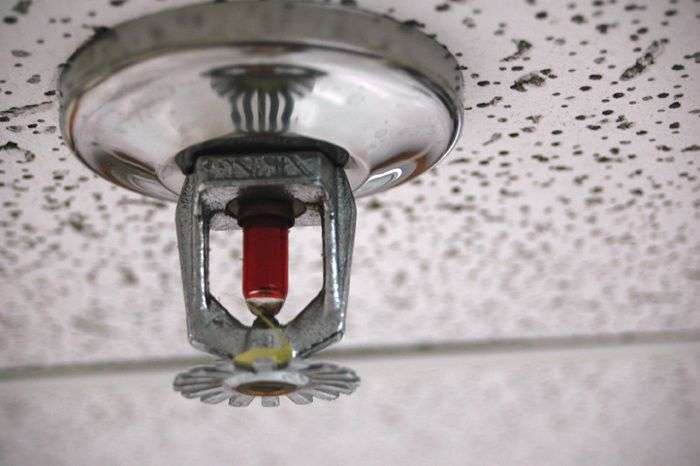
In the Dec/Jan 2009 issue of Fine Homebuilding (#200), I reported on a new code that requires fire sprinklers in all new one- and two-family homes and town houses. The code appears in the 2009 IRC, but doesn’t go into effect until the start of 2011.
It’s a heated issue
I just spent several months researching and writing a feature story on fire sprinklers for our Oct/Nov 2009 issue (#206). The article explores the myths and facts of residential systems, how they work, how much they’ll cost, who will install them, etc. It doesn’t get into the debate that’s flared up (sorry), however, which—from what I can tell—is pretty intense.
Money or life? Hmmm…that’s a tough one
So the whole purpose of fire sprinklers is to save lives. Duh, I know. But I have to make the point because there are people out there who think otherwise. And there are many who are passionately opposed to the new requirement, so much so that they’re spending a lot of time (and by spending I mean lobbying and by time I mean money) trying to block the code from being adopted. Why, you ask? To be honest, I’m wondering the same thing. And my guess is money.
What’s the problem?
|

Those who oppose the mandate say they’re concerned about the potential of pipes freezing in colder climates, damage from accidental discharge of sprinkler heads, and the availability of adequate water supply in homes served by well water. Let’s take a look at those arguments…
Frozen pipes?
I think most of this concern relates to a standalone system, which is a system of piping separate from the home’s plumbing. The water in these pipes is stagnant until a sprinkler head activates. OK—stagnant water is more susceptible to freezing than moving water (backflow valves are required to prevent contaminating the water supply). But what are the chances of water freezing in a heated home? And don’t we take precautions in new construction to protect all piping from freezing? An alternative is multipurpose systems; the piping in these systems is part of the home’s cold-water line, often made of PEX (which is less susceptible to freeze damage), and the water’s always moving.
Concern about frozen pipes is a lame argument.
[[[PAGE]]]
Accidental discharge?
Sprinkler heads are activated by heat. High heat. Like the kind that isn’t likely unless there are flames present (155°F-175°F, depending on the type of head). So only the head(s) closest to the flames actually discharge water. Research shows that chances of an accidental discharge due to a defect in the sprinkler head are 1 in 16,000,000.
Well water?
The NFPA 13D (the National Fire Protection Association’s residential-sprinkler code) requires enough water for two sprinkler heads (which use about 26 gpm combined) to discharge for 10 minutes (for homes over 2000 sq. ft.; it’s 7 minutes for smaller homes). Achieving that volume can be accomplished by a pressure tank(s), a bladder tank(s), a storage tank(s), a cistern, a well equipped to draw that amount—or a combination of these.
It’s gotta be the cost
Most people—including those opposed to the code—get wound up about the cost. Money’s tight all around these days, for sure. So I’ll concede to the concern here. But the cost is much less than you probably think. Costs can range quite a bit around the country, from 87¢ to $4 per sq. ft. (materials and installation). The average is about $1.50 per sq. ft., which typically comes out to about 1% to 2% of total construction cost. So, in keeping with averages, having a fire sprinkler installed in an average 1500-sq.-ft. home will cost about $2250.
Now, consider that fire sprinklers and smoke alarms combined reduce the risk of death by 82%. And in the 20 years that Scottsdale, Ariz., has had fire sprinklers on the books, no one has died from a fire in a home equipped with sprinklers.
What do you think?
-
-
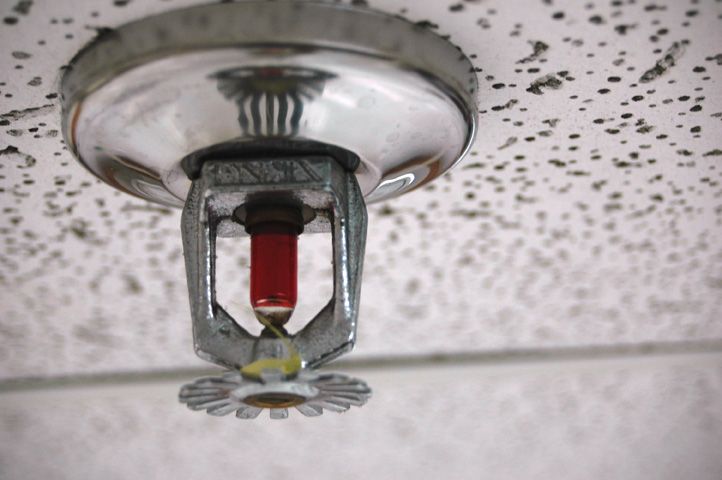
Sprinkler head manufacturers offer different styles, including the flush concealed head shown here. The sprinkler head is recessed and covered by a plate that sits flush with the ceiling. When a fire starts, the plate falls away and the head drops down.














View Comments
I don't see what the issue is with the cost. If it was a retrofit situation, okay; you're laying out money that you probably don't have. But in new construction, it's all rolled into the overall cost, and on a house that's going for $200/sq. ft., an additional $2/sq.ft. might conflict with that big flatscreen that was going in the family room. Maybe. People just don't like change.
Great Post Chris.
You're likely right that those opposed to mandatory fire sprinklers are actually opposed to the addition costs of building a house. There is also a good chance that they are simply opposed to anything "mandated."
Given home fire sprinkler’s established safety record, and the simplicity of the multi-purposed systems you describe in the story (sprinkler water and potable water in one), I voted "Absolutely."
I would also be willing to bet that if you looked more closely into the range in costs, and maybe you have, that you would find they are lower in markets where installations are more common and more expensive where installations are rare. In which case, if sprinklers become required in more areas, costs will drop.
I know that unreasonable codes can be problematic for builders and can drive up construction costs unnecessarily, but if they are in fact written for homeowner’s safety, this one seems more than reasonable.
Right you are, Brian. Costs are the lowest in areas where sprinklers are common.
And I'm with you, CB. Can't roll the flat screen tv into your mortgage. And you don't get a break on your homeowners insurance for one either. But you do if you have a fire sprinkler system...5-15%.
One issue that came up in my research is excessive tap fees. Some municipalities are taking advantage of this mandate by charging commercial rates for sprinklered homes that often require a larger tap size and/or charging a 'standby fee'. A 'standby fee' for a service you're already paying for? Makes about as much sense as...oh, I can't think of anything snappy. The fee has been nixed by legislation in some states(I think NJ is one).
I'm with ChuckB on this one. Along with more insulation than is required by code, I'd opt for this system on a new house whether it was required or not. I'm curious about fire insurance costs for a house with a sprinkler system. It could be a sprinkler system pays for itself over time in insurance savings.
I think we're all in agreement on this - any antagonistic feelings towards the new code stem from some folks' aversion to being ordered around. "Mandatory" raises the hackles on a lot of folks.
The overall cost is nothing when rolled into a $300K house, sprinklers nowadays are very concealable, and I would imagine that sprinkler systems will put a nice dent in home insurance premiums.
No Way! You want it buy it - I would love to have them installed in my own home but this is a crazy mandate. It is not like houses are just burning down left and right.
Residential sprinkler requirements mandated by communities aren't new. Growing communities are faced with heavy infrastructure and operations costs - in this case, new fire stations, equipment and personel. Existing residents often are burdened with tax increases to pay for the improvements even though the costs are due to the newcomers. And when communities try to shift the costs for new infrastructure to new residents, the courts often smack them down. By requiring new homes to be sprinkled, the community reduces the distance and capacity requirements for fire station locations. I think under these circumstances (new expanding neighborhoods), the requirement for sprinkling new homes is a good idea.
Whether you agree with sprinkler codes or not - The firemen porked us! They packed the ICC meeting last fall. They got lobby $ to pay for bodies at the vote. I'm a dues paying member of the ICC and am entitled to vote but I have to pay my own way to the meeting. The firemen got a paid vacation, paid time off work (due to union contract rules) and all they had to do was show up for the vote.
The I codes are supposed to be 'consensus' codes where all stakeholders have a seat at the table. I was disappointed to discover that 'consensus' meant 'lobby $$$.'
They got it backwards! Requiring sprinklers in new buildings is not the best use of money. I keep a mental log of the houses that burn in my state (small state - easy on the aging mind). The houses that burn are the OLD ones. Generally balloon frame vintage. It would be a lot more sensible to require anyone with homes built before say 1952 to be retrofit with sprinklers ASAP.
The few relatively new homes that I've heard of burning locally were attributed to 3 causes. Attached garages (combustibles stored ignited), Natural Gas (backhoe pulling a line), and Arson.
I'm sure there'd be pushback to forcing owners of older homes to pay for sprinklers but there is a president here in RI. Several towns have begun requiring that homes with cesspools either hook up to sewers or have new modern septic systems installed. Average cost for sewer hookup= $4000 plus $700/year; new septic system = $20,000. Owners of old homes complain loudly but the measures haven't been struck down in court.
So let's get the code amended to require old homes be sprinkled.
How many lives will new sprinklers really save? Not many. Instead of wasting the money on new homes, use the money wisely on a more effective system with a proven track record. Let's impose a special 'fire prevention tax' on all new homes and use the money to put smoke detectors into old homes AND conduct annual fire inspections of all homes. Read on for the logic:
Homes built since the '70's have integrated hardwired smoke detectors and many states now require CO detectors and heat detectors as well. I believe all states require homes built before hardwired smoke detector requirements must be retrofit with battery operated detectors verified at time of resale.
Smoke, CO and heat detectors alert occupants far earlier than sprinklers activate. According to NFPA stats, prior to smoke detector requirements in new AND EXISTING homes there were 10,000 to 15,000 home fire related deaths in the US each year. Recent stats have the number at 300 - 400 per year. Smoke detectors save lives - lots of lives.
It will cost $1,125,000,000 to install sprinkler systems in half a million new homes built each year based on the $2250 figure Chris notes above for a 1500 sf (small) home.
With the fact that older homes burn much more frequently than new homes in mind, how many of those 300 - 400 lives will be saved by installing sprinklers in newly constructed homes?
Pay close attention next time you hear of a tragic house fire where people lose their lives. Note the age of the home and more importantly, did the home have working smoke detectors. Often reporters make note when there were no detectors or non-functioning ones.
Instead of requiring sprinkler systems in new home I propose a more practical use for the money. State fire marshals should impose a fee based on the square footage of the new home along the lines of the anticipated cost of a new sprinkler system - $1.50/sf. Put those funds in a locked account to keep politicians away. Use the money to:
1-Install free smoke and CO detectors in old homes and
2-Conduct annual inspections of EVERY house. (you can bet people will change detector batteries before the inspector shows up knowing they'll be charged a hefty reinspection fee)
Many states have motor vehicle inspection requirements to ensure drivers and passengers are safe - Why not home inspections?
My friend moved into a home that required a sprinkler system because the houses were close together. Twice --Twice the line froze on a really cold day --Over 50K damage-which the insurance company payed for but know their rates are sky high and they are worried about not being able to be insured. They were out of their house also for two months. We were considering moving there but no way with that over my head! This was in the Pittsburgh suburbs with a builder that is known to everone here.
Great for Arizona. What about New England? Less than a year ago we lost all power (home heating included) for four days and some neighbors for more than a week. This is a reality for some parts of the country. Are emergency generators also part of the code requirement?
It's just one more thing that adds to the cost of a home. It is not just the $2/SF for the sprinklers. It is the sprinklers plus all of the other regulations a builder has to contend with. New houses are getting to the point where they are un-affordable. So a builder has to create a "cheaper" home in order to accommodate all the regulations.
A well constructed house with smoke detectors and proper means of egress is very safe. Sprinklers are great - let's just leave the decision where it belongs; between the homeowner and the builder.
Mike - the 300 - 400 number you're using should actually be 3000 fatalities (and 14000 injuries). The number of fire-related deaths has been hovering around that figure for over ten years. it's interesting to note that the number of residential fires increases each year. In 1998 there were 381,500 and in 2007, 414,000. Here's where I got my stats: http://www.usfa.dhs.gov/statistics/national/residential.shtm
arlene13-
Thanks for your post.
So the pipes in the sprinkler system froze, but not the plumbing? Any idea what materials were used for the piping of each? Just curious.
Mike -
I'm wondering how that enormous figure you calulated will impact the 7.5 billion dollars lost in residential fires each year. Any thoughts?
I also wonder how many people were up in arms when grounded outlets were added to the code.
I will say it more bluntley than previously stated: "mind your own dam business". A constant story line exists with owners and those in the industry who are constantly forced by government and the "politicatians and inspectors" (who are those individuals who fail at making a living in a capital system and revert to the accepting a nominal job with government - so they can feel important and punish people who have productive meaninful jobs). How many people do you know who graduated to become a politican, only a few. The majority sucked at there previous job so they became building inspectors or government employees.
The underlying issue and funding comes from insurance companies. The insurance companies are masters of capitalism and profit (at my expense..I may add). They have every reason to promote in home sprinklers. Only a fool would think insurance will decline even a token amount oon homes with sprinklers, but the insurance companies losses will profoundly fall. Imagine, I'll reduce your insurance cost, if you pay $5000 for sprinklers... great...$80 year savings. BUT, where then is a fire, the insuarnce company reudces there average claim $50,000. Smart.
I dont' need any idiot politican or activist to protect me. The issue of cost only relates to the insurance company. If my house burns, what does it cost the local government or fire deparment. A service call? So we should have 1 million home owners in my city pay $500M so the govenrment wont have to have as many employees? So the insurance companies can increase there profit 11 percent?
Mind your own business and leave people to manage there own risk. The insurance company will mitigate there risk and even now charges more when circumstances warrant.
There are a lot of reasons that homes cost more, and we still loose too damn many people, including firefighters, in fires.
If my house burns, what does it cost the local government or fire deparment.(sic)
It cost the firefighters 115 deaths last year. Eighty percent of firefighters are volunteers, your friends and neighbors. You may think that this is an acceptable cost, I think you sell their lives too cheap.
Firefighters know that the newer the building, the greater the risk. New buildings are built lighter of more combustible materials that burn faster. Builders are cutting the cost of building at the risk of the occupants and firefighters. Is it too much to ask you to mitigate the risk by extending the biggest lifesaver in the history of fire protection to our homes?
(Yes, its true, only one time have two people been killed in a sprinklered occupancy since the establishment of the NFPA in 1898.)
Yes, I am one of those volunteer firefighters that provide fire protection for most of our country.
I agree with M Guetin that the group that benefits the most from this proposed regulation is the Firemen, adds many more jobs and they are the group that is protected the most.
I understand that there was a proposal to mandate sprinkler systems in the Chicago area and a cost benefit study was done, the result of the study was the total cost did not warrant the the mandate.
I hear people say the cost is insignificant , but every added 1,000 dollar cost take home ownership out of the picture for someone.
I can think there are many areas where more lives are lost per 1000 population and yet I don't see mandated proposals for behavior changes in those areas.
As for as new homes being built are using short cuts and lower construction standard than those built 30 or 40 years ago, you should take a look at the code changes in that period of time. I can only remember on 1 home suffering damage by fire of the hundreds of homes that I have built and that was caused by the homeowner putting ashes from the fire place in a waste basket.
Well, I know a guy in South Carolina who's bathroom pipes have frozen & busted twice! Also know a guy in Birmingham, AL who's in-home pipes froze & busted last winter. So to say the argument is lame is lame in itself.
And who is the IRC? Their slogan is "People Helping People Build A Safer World". What a bunch of bunk!! It's the New World Order is what it is. And their m.o. is to make their insidious power grabs appear as though they are for your own good and safety. Anyone ever heard of Agenda 21? Look it up on the net. It's the U.N.'s plan to regulate every square inch of this planet. They've got codes for everything. Now what I want to know is, when did the U.S. give up its sovereignty to the New World Order? Did We The People ever vote on that issue? And tell me how the I.R.C. is applying its mandates to huts across Africa. And you mean to tell me people here in the States are actually taking any of this seriously? It's all a big hoax to take away people's property rights, plain & simple. WAKE UP, AMERICA!
Watch this vid to find out what's really going on:
http://video.google.com/videoplay?docid=1070329053600562261
Freezing pipes are a very real concern for a great many of the new homes built I our area. They are second and vacation homes that are empty and unheated much of the winter. An unattended home that is being heated to keep the pipes from freezing is something of a risk in and of itself. Further, 26 GPM for 10 minutes is far beyond the capacity of most well systems that I have seen and virtually all of the homes in our Northern Wisconsin area are on wells. I am also a volunteer fire fighter so appreciate the concept. Seems to me that perhaps the code should address fire suppression and not just a “sprinkler system.” It is only a matter of time before some smart person develops a fire suppression system for homes that is not dependent on water.
Chris, You are right, I got my fire death numbers incorrect. I was using stats I got from a local fire official - not sure his source. You have to sift through the NFPA reports and extrapolate to get specific numbers on one and two family detached home fires and associated deaths. Home fire death numbers are aggregated with certain multifamily dwellings. So the total 2007 deaths in one and two family dwellings (those the IRC addresses) were 2394 in US.
As a licensed plumbing/hvac contractor doing a fair amount of new construction, I would would benefit from this code requirement. HOWEVER, I strongly disagree with it and hope that our state will adopt the 2009 codes without accepting it in "whole", as has been predicted.
We are seeing a disturbing trend in ICC, whereas they have moved from a primary purpose of specifying and unifying installation and materials to eliminate unsafe and improper practices, to dictating energy policy in this country, and now possibly to requiring systems in new homes, bypassing local and state governments, much less federal laws and due process. We thought they had over-reached their position when they dictated energy policy by requiring minimum insulation and energy standards, something normally reserved for a federal agency. Now, ICC< without following channels of local, state and federal lawmaking, have dictated a huge change that will have financial implications for many, many years. No one disputes that saving lives is important, but we also have to acknowledge that our current system of lawmaking allows for a thorough examination of potential "laws" in order to allow for not only cost analysis, but also for unintended consquences of each law. Some "life-saving" proposals result in unintended consequences. In our area of the country, new home prices start at under $100,000, so a $2,500 price tag is actually 2 1/2%. Insurance savings will translate into a payback of about 20 years. To suggest that insurance discounts will promptly pay for the system is just not likely. A much better investment would be to use those 2 1/2 points to buy down the interest rate. How many are killed in house fires inside, oh, let's say, 10 yr old homes? Anyone know? But, initial construction costs are not my concern. We've seen numerous times where power has been out in neighborhoods for extended periods of time. Often, a house will not freeze the plumbing during a short power outage, because of the ability to hold the heat. However, if the sprinkler lines are in the attic, freezing is most CERTAINLY an issue, ESPECIALLY in the new, well insulated houses. Why in the world are we required to completely insulated the flue and drain pipes on 90%+ furnaces where they are exposed to attic temperatures if freezing were NOT an issue?????? The use of laminated beams and TJI's also limit routing of lines, often requiring that the penetration be at least a couple of inches above the sheetrock line of a ceiling. This is my experience in Oklahoma. What about northern climates? As the contractor, what is MY liability for failure of a sprinkler head or unintended discharge of water? We had one, count-em, ONE large claim against our company for a city sewer backup, on a sewer service, one that was inspected and approved as installed. The homeowners were out of town for two weeks so the house "percolated" for that entire time. The claim, when finally settled, was for almost $100,000, (most of which was paid by our insurance company)and although we paid many times over that in premiums through the years with that company, they refused to renew us upon expiration of our liability policy, forcing us to shop insurnace coverage with a recent large claim on our record. We may see discounts on homeowner's policies, but in the long run, what will happen to ours? What if, during construction, another contractor nicks one of our pex lines? Who will pay when that line blows out? What if a sprinkler head FAILS to open when it should? Who will be liable? We know that smoke detectors save lives, without large upfront costs and they are inexpensive to replace. Will homeowners become so dependant on the belief that a sprinkler system will save them that they will quit checking batteries and keeping fire extinquishers in the kitchen? Most kitchen fires are grease fires? Will they assume that a water sprinkler system in their home will save them? How many will die of smoke inhalation because they didn't check their smoke detectors, and a smoldering fire didn't build the heat to activate a sprinkler head? So many of our code requirements are really to save dumb people from hurting themselves. . . raising water heaters, using pipes to provide combustion air to water heater closets. . all designed to keep people from doing dumb things like sealing up their water heater closet or storage or spillage of fuel near the water heater. Numerous warnings did NOT keep this from happening, so we changed the code. Will sprinkler systems increase smoke related deaths because homeowners are basically dumb and lazy? Who knows. That's the point. Local, state, and federal legislation is subjected to public scrutiny and review, with all aspects examined and challenged, allowing input from the general public, along with local and national professionals. To suggest that rules passed at ICC conferences are subject to the same open scrutiny is simply not realistic. This "rule" needed true open review and debate before being put into place. IMHO
Chris - Regarding the cost effectiveness of sprinkling new homes: Direct impact on property damage.
The enormous number I calculated ($1.1 Billion) surprised me. If we factor in major remodels which will also fall under the sprinkler requirement, then the price tag goes up even further.
I couldn't find any stats through federal gov nor NFPA that correlates year of home construction and property damage cost in event of fire. That would be the only way we could determine how 1.1 Billion spent on sprinklers might impact the 7.5 Billion in losses.
I suspect there will be very little impact.
I still think the $ is best spent on smoke detectors - It's the only way we can address older homes that do and will continue to be the largest percentage of dwellings in the country.
Another Idea for Fire Protection
I have monitored burglar / Smoke / Fire / CO alarm systems installed in every house I build and remodel. A complete wired system costs between $500 - $1000 and will handle up to a 3500 sf house. Monitoring costs $200 - $300 per year.
When a smoke, heat or CO detector goes off and no one is home, the fire dept is there in minutes.
I too am a New Englander.
Freezing pipes in heated houses are a reality and not a "lame arguement". They freeze in the basements of heated homes and they freeze in homes without power.
As for accidental discharge, at work we have annual accidental discharges, from people accidentally hitting the sprinkler hears with things. Kids, stuff, houses, and sprinklers. Now there's a bad combination.
Well water (or city). I don't know many places where you can get 26GPM flow in a residental water system. Additionally you can ask any plumber this question. What size pipe do I need for 26GPM. 1/2" won't do it at all. 3/4" may achieve more than 23GPM over 100psig! (I don't want that much pressure in my plumbing. So the sprinklers will need to be piped with 1" tubing (which may achieve 37GPM at 100psig). I don't know how many people have priced pipe lately, but each size up almost doubles the cost. If the 3/4" is $15/length then the 1" stuff will be ~$25. That's going to be a lot more additional cost than is calculated here.
Additionally, the two most common fires are started from open flame or electrical. In the the case of the electrical fire, chances are you won't have power, and therefore won't have a well pump. I recently had my pressure tank changed out and up sized (from 40 to 80 gallon). If I need 26GPM for 10 minutes, that 260 gallons of water to be stored. Damn! That's one BIG tank to have in my basement!
I like the idea of regulation, but someone needs to figure out just how to implement it reliably, safely, and cost effectively in a residential setting. Otherwise it a lot of money that we have to spend for something that won't be worth a penny.
One more item. Homeowners insurance. I doubt that the price will go down because a sprinkler system is installed. The number of accidential discharges and the cost to clean them up will far outweigh the "discount" the insurance company will give you so your house doesn't burn to the ground.
Chris, you need to get out from behind the computer more often. To dismiss the frozen pipe arguement with such a casual attitude is unworthy of Fine Homebuilding.
I have been involved with the construction of many commercial buildings and for higher education where the sprinkler pipes are in insulated spaces, from Oregon to Minnesota to Missouri to Georgia. I have had them freeze and break in NUMEROUS instances. The resultant mess is unbelieveable. The skanky water that has been sitting in the pipes, sometimes for years, is incredible. The mess that is created is worse than a fire.
Moreover, I have never had them discharge for a fire, and have spent millions of dollars installing them. Not that I would build a commerical/educational building without them, due to the heavy occupant load and multiple stores, but you need to know that they really do freeze and not blithly dismiss the objection.
Second, I have had the heads broken off more times than I can count. When this happens the mess is, again, incredible. And yes it does happen.
In a residential application, I would object to them, not from a cost standpoint, but because I think the cost is not an effective use of a budget. If occupant protection is the goal, I would put the money into more effective smoke/carbon monoxide alarms, better fireproofing of materials (including cedar shakes and siding), portable fire extinguishers (and their proper use), and community education for fire prevention and responding to a fire.
Don't be so quick to dismiss reader concerns. Healthy discussion is good, for both sides of an issue. It's what we expect from Fine Homebuilding.
Sprinkler System Question:
Is there any cause for concern with stagnating water in a potable supply pipe style residential systems?
Commercial sprinkler systems are isolated from potable water with backflow preventors, but residential systems usually have sprinkler heads on cold water supplies. If those pipes are 'T'd off and dead end at a sprinkler then the water sits there for years and years and years.
Sure who could be for burning kids? But what about enslaving them to socialism? We need a sprinkler for that.
There should be exemptions for nonflammable construction.
I am building a 4400-sq ft earth-sheltered house entirely out of concrete. While I agree that the contents could burn, that would be unlikely to cause my demise. Having to install sprinklers would be a needless cost and a waste of resources.
niceguy...I don't casually dismiss the concern for frozen pipes. But I do dismiss the argument that sprinklers shouldn't be in homes because frozen pipes are a concern. In multipurpose systems (which is what you're referring to, Mike) the sprinklers are part of the home's cold water pipes. Sprinklers do not tee off of the cold water feed lines, they actually run in-line. The water feeds to plumbing fixtures are the ones that tee off of the sprinkler line. Very similar to a trunk and branch system. So you're not adding an extra set of pipes that 'could freeze'. You're using the pipes that already exist.
Positives:
Fire departments are going to be fewer, farther apart, and more expensive in the future.
Residential sprinklers are a special class. They are not a prone to the extensive water damage seen in businesses. We will learn to live with them and leave them alone.
As the population gets older, more lives will be saved.
Negative:
As long as the homeowner can shut them off, they will.
New technology to reduce fires in kitchens will be hampered by laws requiring sprinklers and not recognizing the new technology.
(Example: Municipalities which restrict the size of water meters limiting flow to fire sprinklers.)
Municipalities will want to charge license fees for something that will save lives and money. Send them a tea bag and vote them out if they don't get the message.
First off, sprinklers are a life saver. No doubt about that. That being said, they do go off accidently. This is usually caused by a game of indoor football, moving large furniture, kids playing with toys that hit the ceiling. Accidents are what usually cause these problems. And when it happens, it creates a huge, costly mess. Homeowners must be instructed in how to turn off the system in an emergency and the shutoff valve must be in an accessible place. These risks are real but the tradeoff is well worth it.
The last thing we need is more government intervention telling us what we have to do with OUR property. These same rules Pipes do freeze, heads get knocked off, the cost vs benefit is to high. People need to take responsibility for their lives not have governments forcing everything down their throats. I work for a government so I should know.
We have been required to sprinkler new residential construction in Prince George's County, Maryland for some time now. I view it not only as a life safety issue or money issue. It is more of a property safety issue. More properties are saved by this requirement than life (I would imagine). If something goes wrong and a fire occurs while homeowners are away from their home, sprinklers kick in an property damage is minimized. I would think that this would be beneficial to any economic recovery, personal or global. This requirement and its benefits are bigger than any one of our personal self serving opinions.
We have heard from posters that have never personally experienced a devestating loss from fire. As a volunteer fireman I have seen first hand those affected by fire. Say all you want about frozen pipes and water damage but most items can be dryed out. How many of you have tried to put ashes back together? Sprinklers will not keep a house from burning it will protect the occupants long enough to escape. Look at the fire tests done on identical rooms and then make an informed decision about sprinklers. Codes are mandated because not all builders are the same nor do the do the same quality work. Sprinkler pipes laid in an attic is down right stupid, do we run the pumbing pipes in the attic? Insulators that stick the insulation between the pipe and the drywall will cause a problem. But it was not the sprinkler fitter who caused the problem. I'm not sure we are trying to save the "stupid" people we are trying to save their kids. Put one of them in a body bag burnt beyond recognition and get back to me on the mandate.
Chris,
You note that the sprinklers are in-line between supply and fixture and not a separate branch. How does that work? I configure my home designs for interior 'wet walls.' Very short supply runs to an intermediate manifold with short runs to fixtures. No pipes go overhead in rooms. In order to put sprinklers high on walls or the ceilings of rooms, I would have to run separate lines.
And according to the requirements of the sprinkler code, we can forget about 1/2 inch supply pipes. Minimum allowable size is 3/4 inch (P2904.6) and will likely jump to 1 inch when you do a sizing calculation following NFPA 13D or the IRC's prescriptive method.
We submitted plans for an in-law addition this year in Scottsdale AZ. City required fire sprinklers and our homeowner was fine with the cost for that even though they were on a tight budget. Other codes are rediculous. Let's fight those!
Linda
The issue I have with sprinklers is that the horse is already out of the barn before anything is done. To me, it makes more sense to reduce the flammability of home construction and items within the home, much as is done for commercial buildings.
Several fire programs have shown the mock-up of a living room built according to residential codes and finished and furnished with readily available and legal products. A fire started in a trash can by a lit cigarette developed to consume the entire room in less than 30 seconds.
If homes were constructed of non-combustible materials and finished and furnished with materials having a flame spread rating of no more than 50 and smoke development of less than 450, sprinklers would be moot.
I chose to install sprinklers in my recently completed mostly concrete house with all 5/8" fire-rated drywall and all tile floors. It may take 10 years to break-even on the investment from lower fire insurance costs alone.
Due to the type of construction and cost of tearing it down, families will likely be in this house for hundreds of years - like the houses in Europe. That is a lot of savings, security, and future-proofing, for a few dollars a foot. I sleep very well at night.
There are good arguments on both sides. I do know that automatic sprinklers make a big difference for the good in commercial buildings, and they seem to also be a plus when applied to residential
The ICC is not making law, and they are not forcing anything on anybody. They simply provide a model code which state and local governments are free to adopt in toto or in part or not at all. The changes they make to the code are extensively reviewed. If you want to be part of that process, join the ICC. It doesn't cost much.
To me the code is about safety, and we are safer because of it. If everyone did the right thing, we wouldn't need the code or laws for that matter. But we know how well that works.
Mike,
You're right that sprinkler lines start at 3/4-in., but are typically 1-in. pipe. Feed lines are reduced from there, typically to a manifold that tees from the sprinkler loop to feed a group of fixtures.
I'm not sure what the answer is regarding your 'wet wall' plumbing approach. If you are set on plumbing the house the way you describe then you'd have to use a standalone sprinkler system. That does mean a separate set of pipes.
To the builders that have a lot of frozen pipes, find a new job. My view on sprinklers is not about the builders wanting to build cheap and maintain a higher profit margin. It's about people who live in the house. I have two houses near me where a single mother lives there one with two small children the other with three. I believe the father is away on military duty but to the point she did not build the house they live in and is not savvy enough to know the difference between a well built safe house from any other house. If there were ever a fire the options of just jumping out the window and doing everything it takes to get the kids out is real.
My niece takes care of a handicap person that needs 24hr. care. He cannot get out of bed without help, much less get out of the house during a fire. Are these the "stupid" people you are referring to? Mike blamed the fireman, the people who probably have run into buildings on fire a few more times than most builders opposing this change.
For the broken off sprinkler heads, they make pop out type that are recessed and are very clean looking. So get off the Kool-Aid drinking socialism soap box and build something better and safer for the people buying the houses remember them your customer.
As an ex-fire fighter and fire safety office for a large health care complex I cannot agree with the new requirement. Smoke kills people and not fire. Having a good fire safety program and hard wired smoke detectors (in sensible locations, not outside washroom showers) is great. Statistics are that 90% of the time a fire starts a sprinkler will extinguish it and it will accomplish this with less than 4 heads being activated. But then you have to deal with things like people stacking items to close to the sprinkler head causing it to be inaffective or people placing something around it. I think that the code should focus more on smoke detectors in the CORRECT location as to not cause false alarms. If to many false alarms occur then the detector just gets removed. Also during my many training sessions (approx 3000) most people have no idea how a sprinkler head operates and think that all heads are activated if there is a fire which is totally incorrect. Only the head where the fire is gets activated.
Have a good day.
Dennis
In my area, State Farm Mutual provides a discount of a few % if the home has fire sprinklers.
State Farm must have some data that sprinklers reduce fire damage to a home -- insurance companies don't reduce rates to be "nice guys".
As a homeowner in So Calif (non-fire prone region), I wiold give serious consideration to sprinklers if I was building a new home. Life safety aside, I'd rather deal with water damage than smoke & fire damage.
All good comments here, pro and con.
I'm wondering what the long term outlook would be for a framed residential structure over say the next 50-100 years. What is the statistical likelihood that it would be involved in a fire versus what is the statistical likelihood that, if it had sprinklers, it would be involved in a sprinkler failure (and how many failures over that time span).
While I think the $2,000 cost per system to install is grossly understated (remember, you have to count more than just the pipe going in) I still take no issue with the initial install. You see, the majority of the work that I do is on very old houses, so I guess I'm more sensitive to how systems age over time. I'm certainly no big fan of galvanized pipe, and definitely not galvy that doesn't get flushed regularly. I'd suppose that you could get one of these systems made up with copper pipe and brass fittings, but there goes your $2,000 budget for certain.
As someone else referenced, the government websites:
http://www.usfa.dhs.gov/statistics/national/residential.shtm
points out that the most likely cause of fire is going to be cooking (27%) but the greatest number of fatalities come from Arson (12%, followed by: Smoking 8%, Open Flame/Ember (fireplace?) 6%, and Other Heat/Spark 5%). In terms of fatalities, only 2% are attributable to Cooking, so while Cooking causes the biggest number of fires, they are fires that are readily survivable.
It seems like, perhaps, the fatal fires are ones that happen when folks are asleep (ignoring of course the leading cause of fatalities: Arson). So in something like that sprinklers and smoke alarms are going to make a big difference. Also, at least with the number 2 cause, smoking, these fires caused by behavior (smoking) and tightening up building standards won't prevent the cause. So again, sprinklers, fireproof materials and all should help.
In terms of loss of life, this is a problem that takes 3,000 lives each year. Sometimes more, sometimes less. Not to minimize things, but this number pales in comparison to traffic deaths (35,000) and gun deaths (35,000) both of which are also very resistant to legislative protection of any sort. The other observation that I would make is that there is such a diverse collection of fire causes (3% electrical, 3% heating, etc.) that it's going to be very hard to affect these fatality numbers meaningfully so instead of stopping them before they start, the solution is to fight them after they've begun.
I suppose we won't know the answer regarding statistics on property protection until 30 or 40 years have passed and we've had to live with and maintain these systems. You can bet that the insurance companies are going to be the first to give us a definitive, capitalist answer. If the cost to repair homes damaged by accidental discharge of a system (does "mold and mildew" ring a bell with anyone here?) starts to outweigh the cost of buildings lost to fire you're actually going to see a higher cost to insurance premiums for houses with systems.
While I appreciate the points made by our volunteer fire fighters and others who are pro sprinkler, I remain undecided. My questions are as follows.
Smoke detectors alarm much sooner than sprinklers activate. Will sprinklers reduce the battery changes with a false sense of security? Does the code require hard wired battery backed up smoke detectors along with the sprinkler system?
Will sprinklers activate soon enough to save lives in a fire that is very smokey, but not large, and the smoke is toxic due to what is burning? What if the smoke comes from a fire in a non sprinklered area?
Is there a dedicated shut off in a standardized location that the fire dept. or others can use once they verify that doing so is OK? I'm thinking about water damage here.
Will water damage become a big enough issue to negate any insurance cost savings? Will it raise insurance costs in the future?
If you don't have a security system that dials someone, what happens when a small fire breaks out, is extinguished, but the sprinklers keep running until you get back from vacation?
Not everyone keeps house in a way that would allow sprinklers to effectively do their job. What then?
If you have a grease fire in the kitchen and you get the lid on the pan less soon than you'd like, will you still get drenched when the plume of hot air hits the sprinkler?
Lastly, hearing that lobby$$$ are involved rather than an argument based only on merit is cause for serious concern. That's a big red flag for me. Thanks to all.
I am an architect/builder in Salt Lake City. I do a lot of resort work in the ski areas around here: dry, heavily- wooded hillsides that are often too far from fire stations for comfort. We have been requiring fire sprinklers in all new construction for years. Cost can be an issue when we show budgets to our clients, but never for long.
This new code will save lives, no doubt. I think we should focus our energy on questioning the many code requirements that do NOT help anybody, unless it's certain specialized subcontractors who have attached to the increasingly Byzantine requirements like leeches.
I'm afraid the biggest beneficiaries of this and many other regulations are the insurance companies, who lobby the IRC continually. In my calculations, the costs of sprinkling a house take 20 YEARS to amortize with fire-insurance savings, meaning that sprinklers are a huge profit-maker for the insurance industry.
Question: Who covers the cost of an accidental discharge in a residential unit? I surely don't want to pay for it.
In addition, if the system is inline run with 1" pipe, there will not be sufficient water flow when a single faucet(especially the one at the end of the line) is open to attempt to keep the system free of sediment and other things settling and grow in the pipes. As most faucets are only plumbed for 1/2" lines, ie. only 25% of the flow capacity of the supply line. So why bother running the 1" lines, they'll fill up to nearly 1/2" ID in 15-20 years anyway. I've just worked in a few older homes where the supply lines were 3/4" and 1" copper and teed off to 1/2" and 3/8" appliances. The lines were nearly full of sediment and the homes were built in the 70's. (the homeowner was complaining of low water flow)
As an architect, I have designed many commercial and residential projects. I appreciate the life saving potential for fire sprinkler systems, however, for single family residences, fire sprinkler systems are impractical.
The purpose of most fire safety codes is to either eliminate the cause of fire or to give occupants adequate time to escape a burning structure. In a multi-story structure or a large structure that may be unfamiliar to the occupants (hotel, for example) it may take as long as 1/2 hour or more to evacuate a few hundred people. A single family residence, on the other hand, can be evacuated in 30 seconds. Keep in mind that a single family residence has multiple exits including the doorways as well as an egress window in every bedroom. Large commercial structures may have only 2 exits per floor.
A fire sprinkler system does nothing to prevent a fire from starting, but is intended to keep the fire from spreading and possibly extinguish a small fire. There simply is not enough water pressure to extinguish a fire in rural areas on a well nor in most urban areas where the water service to the house is only a 1" or 1 1/2" line coming off a 4" water main.
The risk of freezing pipes is a "major" concern. I will not allow water lines in attics on my projects because they will and do freeze in my moderately cold climate. If sprinkler heads are installed in the ceilings below unheated attics, the cost of these systems will have to be increased for additional insulation and possible construction of false ceilings where piping can be protected from freezing.
The increased cost of construction is no minor problem. Over the years, I have watched the cost of construction increase incrementally due to updated building codes. Have these codes saved lives? Undoubtedly they have, but at what cost. How many people are locked out of home ownership because structures are too expensive? Adding, yet again, to the cost due to building code requirements will lock out that many more people from owning a home.
Are there better and more cost effective ways of achieving the safety goals at less cost? To me the answer is "yes" and with a two fold approach. First, concentrate on fire prevention and, second concentrate on warning systems. Both of these strategies are already in place and simply need some tweaking, especially in older homes where the risk of fire is greater. For example, drywall is a great fire suppresser. Why not require drywall backing behind all flammable interior finishes, such as wood paneling. How many times is wood paneling installed directly to rafters or stud walls? Also, increase the numbers of fire and smoke alarms in a house to include "uninhabitable attics" and crawl spaces. These systems, when hard wired with a backup battery, are very effective at warning occupants to evacuate in time and, when they are accidentally activated, they do not cause hundreds of thousands of dollars in damage.
These are just a couple of ideas and I am sure there are many more. When we consider saving lives, we should not jump to the conclusion that spending more money will be the most effective way to solve the problem. There are many common sense approaches to saving lives and most of these are much more cost effective and maintenance free over the long haul.
I have no problem in having fire sprinklers installed in homes. I do think, however, that a reality check might help put this in perspective. I did some research recently on another matter and found that fires in homes had gone down about 50% in the last 25 years much of it attributalble to better fire blocking and detection. Where is the average 1,500 SF home everyone always talks about? Houses in our region are usually close to double that size, so double the cost. NFPA 13D systems are not that great and no one should think these are as reliable or effective as those in commercial or multi-family buildings. Most of the complaints from builders have to do with cost and whether spec builders will have to absorb it or whether the market will allow the natural increase of $2,500 - $5,000 depending on house size. On the safety side, they put too much stock in these systems and I don't think you will see so dramatic a reduction in fires like we have the last 25 years with just better quality construction, detection and notification.
Repairman has some very valid questions. Currently the codes require interconnected, battery backup smoke detectors. The addition of sprinklers would not be in lieu of but in addition to. Go back in time and see how much debate the smoke detectors issue raised. Now those same folks are using "how great they work" to fuel their arguement. Smoke detectors are required on each level of the home, including the basement but not the attic, and in the vacinity of the sleeping rooms, as well as in the rooms. Smoke does kill, but smoke detectors only alert you of a fire they do nothing to suppress the fire. So lets look at the 30 seconds it takes someone to evacuate. A family is asleep at 0200 hrs on the second floor, the fire starts in the kitchen adjacent to the stairs. Because of "false alarms" the contractor had the smoke detector installed across the living room (code complaint). Smoke rises up the stairs activating the smoke detector at the top of the stairs. How long did that take 10-15 seconds?? Now mon and dad have 1/2 the time to get out and have to make it down the stairs past the flames (ouch). Remember no one has even called the fire department yet. Dad hears the smoke detector, wakes up mom from a dead sleep they smell smoke as they open the door 2-3 seconds later. Little Johnny and Susie are in adjacent rooms -- have they heard the smoke detectors?? Mom gets Susie, Dad gets Johnny (hopefully they are still in or near the bed). It takes another 5 second to re-group at the top of the hallway. If my math days are correct that gives us 2 seconds to run down stairs past the fire and out the door. Oh yea Mom has that thing deadbolted and locked, the screen door has to be locked as well. Good Luck Dad. This is the luck family because no one paniced from a dead sleep at 2 in the morning. Once the fire department does arrive they will find everyone in the front yard or is someone left behind. The fire is racing up the stairs and down the hallway -- good luck mr fireman.
Repairman if you monitor your smoke detectors the alarm company will call the fire company for you - house burns down. If you install sprinklers and monitor them the house ends up wet in some area. If you do not monitor (extra cost) you come home to ashes or a wet area in your house. If you have a tank, once the tank is empty there is no more water in the sprinkler system. If you are on a well or municipal system you will have water pretty deep. Better monitor it so those firemen will turn off the water supply. No developer or contractor will care because it is an after market cost.
The non-combustible house was a neat idea. Asks those builders how much that would cost. Bet you would have a sprinkler system instead.
Where does it end. I believe in personal freedom and responsibility. It’s not Big Brothers right or responsibility to force me into installing sprinklers. I should be able to build my home of straw and heat it with cow dung if I please. I’m being extreme but trying to make a point. Tired of unelected bureaucrats making decisions for me.
As far as the cost being to much at the time of installation, one has to take into account that most insurers would include discounts for have a fire suppresion system in the house.
Mossy6, what about the firefighter whose job it is to try to rescue you while your unsprinklered house burns up around you?
Regarding evacuating a house in 30 seconds: How many people do we all know who like to have a drink or three in the evening? Or take a sleeping pill to help them get to sleep? Could those folks evacuate in 30 seconds? My neighbor (who liked to drink) had smoke alarms but died, along with her dogs, when her house burned last year. I'm planning to retrofit my 30 year old house with sprinklers.
Sorry Mossy6. That comment was meant for WilC.
I find it very interesting and telling that even though the pole was blatantly slanted to encourage people to vote in favor of this new code, still it is coming out in favor of no mandatory sprinklers. That should be a good indication of how sick and tired we are of being regulated over every little detail of our lives. What happened to freedom to choose? It should be MY CHOICE if I want to spend the extra money and get sprinklers installed and take the risks that go with sprinklers or stick with smoke detectors. It should be MY CHOICE if I even want to put in smoke detectors. Insurance incentives or disincentives will weigh into that decision also. It isn't about if it is a good idea to put in sprinklers, it is about whether it is MY idea--MY choice.
Inform me, then let me make up my own mind.
As an indusrty professional who relies upon the code, I feel that the issue to be angry about is the manner in which the code consensus process was co-opted to assure this requirement was added to the code. Fire-fighters packed the house to ensure the vote went their way. It was a mugging by "majority rules" not a consensus.
Maybe next round, the masons will pack the house and all houses will have to be made of masonry.
And then after that the metal stud industry will show up...
And then the bidet industry...
I suspect that unless the fire-fighters tend to continue packing the house at every ICC meeting, the requirement will be softened (or eliminated) and some options and exceptions will be made available with the next consensus cycle.
I think that the consensus process needs to be changed so that this can't happen again.
If this issue bothers you then you should lobby the jurisdictions you work in to ammend the code at its adoption and eliminate the requirement.
Hmm..
Where to start...
Sprinklers are supplied with pressurized water from black steel pipe. The water often lies in the pipe for years. They are supposed to be drained and refilled. They are steel because it doesn't burn [duh].
In a fire when they spray it isn't the fire or the smoke that does more than 50% of the damage it is the black rusty filthy water. A minor fire can literally put you out of house and home. I've been a carpenter for about 35 years and have seen the results both in houses and in commercial bldgs.
In fact the same is true of the fireman's hose. Not the filth necessarily but the water.
As to cost they are custom fitted to each unit. They are very labor intensive. Lobbying has kept the head certifications and new tech out and prices up.
So if there has been lobbying I suspect the companies making these products. It may be that firefighters were recruited to 'do the dirty work', I don't know. I bet the money behind them was mega company. we are talking billions , not millions if they succeed.
What are the sources of fires. That I think is the correct question not how to install a firehouse in every home.
Just from looking at the nightly news for about 50 years I'd have to conclude that smoking, kitchen stupidity and lack of maintenance of appliances that use combustibles are the top 3 sources of residential fires.
Smoking eventually kills the source of the fire-a person.Inspecting every house for a carbon monoxide detector would be taxes well spent.
If you want to spend money on increasing your safety go from propane or gas to electric, that should reduce the cause of most kitchen fires. Forgetting to turn off a heating element is still a risk. Spending on a sensor to turn off a burner at say 140F might be a better idea than sprinklers.
I will be building a house with solar water heat. A well insulated storage tank will get me through the stormy days and dark nights. My electricity will be also produced from the sun and stored in batteries and occasionally bought from my electric utility. The chance of fire is minimal .
That brings me to electricity. Newer breakers and service boxes have been made that are sensitive to arcing in the line. They trip automatically when even an intermittent fault occurs. Last but not least :
No one ever got out of here alive. We can manage risk but we were not born to be immortal, just intelligent,calm, hardworking and mindful. If you ever thought that campaign finance reform didn't touch you directly, think again-this reeks of influence peddling, not of helping the common good- either firefighters or homeowners/renters.
Take a few deep breaths and definitely attend your local gov't meetings. Speak up loudly and intelligently. Make it clear that your vote and your financial support as well as volunteer hours will not support any who vote for this.
I'm not going to write a whole long comment that few people will ever read, but my opinion in a nutshell is that I would pay to have them installed if it would sav me and my family's lives, BUT at the current point in time, they are just hideous. I really wouldn't want one of those protruding from the ceiling in every room. Unless companies can produce more sleek looking systems then the choice should be left up to the home owners.
Some time ago, when I began to study the Massachusetts Building Code, the first comment from the teacher, was a question: "Can anyone tell me why we have a Building Code?" There were answers from the students, but nobody got it right. The answer was "FIRE!" And as we ventured on, we found out that almost every building component had its own fire rating. And, a copy of you plans must pass through the Fire Marshal's office before you will be Permitted, so am I surprised that firefighters pack the meeting in favor of adding sprinklers to the Code ..... NO! The Fire Departments have always wanted sprinklers in your home, and we all know that they can be recessed to pop down when needed. The argument has always been cost, and we all know that that is not a valid argument in the rear view mirror of 20/20 hind sight. I say "BRAVO!" it's about time.
The IRC and the insurance industry clearly are tripping over dollars, to save pennies. Does it surprise you that these bodies are mandating a panacea, to make the world a safer place? These same bodies, overlook a much bigger problem. They refuse to hold the screws to the folks who build their wet dream abodes adjacent to forests or grasslands. How many homes have burned to the ground or have stressed our national resources (BLM, Forest Service or wildland fire crews) because the greedy second, third, fourth McMansion homeowners have a sense of entitlement that the rest of us will pay for their fire suppression?
The IRC and the insurance companies should concern themselves with the true problem of poor building site selection rather than the occasional house fire.
Will the sprinklers work, if one spills hot coffee on their crotch?"
Hello, Chris. I do look forward to your in-depth article, and hope you've looked into the politics behind this as well as the practical issues.
Many good points have been made in the previous posts - the most important of which is that the vast majority of home fires occur in houses over 60 years old. Those are the ones with the outdated electrical systems, the cause of many house fires.
The NAHB pushed hard against this code, but the firefighters and the fire-suppression lobby behind them won the day. I listened to the tapes of the arguments for and against the provision during the IRC meeting in MN and was shocked that the legitimate concerns of the homebuilding and design industry were ignored.
Cost is indeed an issue, but not because of the 1%-2% cost of these systems. Rather it is the unending upward spiral in home costs - this is another contributing factor. 2% here and there starts adding up.
Next on the agenda is enactment of the commercial standard for stairs, which will require a maximum 7" rise and minimum 11" tread. Again, we'll be told it only contributes a small percentage to the cost of a house...
I understand the comments about getting to make my own mind up about what house I should or could live in. Many of you ask to be informed, and allowed to decide. How can that happen if the people informing you (the contractor) are not at all informed. Residential sprinkler systems are installed only in the "living areas" of your home. Closets, bathrooms under 55 sqft, garages, and attics are not required to be sprinkled. Mostly because fires that start in these areas do not generally cause a life safety issue. Sprinkler pipe in commercial buildings is steel but in a home it would be CPVC or pex. The time it takes to hang the pipe is less than the time it would take an electrican to wire a house. The average size house would take two or three days, typically. Pendant head can be recess into the ceiling so they are not noticed. Pendants would only be used on homes over one story where the pipe would be run in the floor ceiling assembly. A single story or the last floor of the home would have sidewall sprinklers. These are not recessed but have been made smaller. There is a tank and pump assembly made for residential systems that takes up a little more room than a wood pallet and would fit in a storage room. Remember the residential sprinkler system is there only to give enough time to escape the home safely. A side affect of sprinklers is saving your personal property.
So if you are going to use the arguement that it should be up to the owner lets learn how to correctly inform them. How many contractors are sitting down with Harry Homeowner and giving sprinkler systems the same amount of time as what counter tops, kitchen cabinets, siding, paint, and carpet can be installed?? Let's also remember that even though you build the home with the intent to live in it forever, sometime someone else will be living in the house -- living with all your decisions. Whether you build a straw hut or a brick house.
Kudo's to the build it in a logical place.
This is no more, nor less, than yet another government seizure of individual rights, responsibility, and risk. There is loose in the land the underlying mindset that a government large enough and intrusive enough can somehow remove all hazard from your life. Historically, such governments, given such power, have caused the deaths of many more millions of people than all the housefires in recorded history. How many times will the government--at all levels--come to you with yet another restriction or requirement in your life, with the promise of greater security? And how many times will that promise really turn out to be just increased expense, increased inconvenience--all at the price of reduced liberty? And (the real question) how many times will this happen before the people affected will cease to believe the false promise, and reinvigorate their capacity for rational, critical thinking? Not one more çode imbecility should pass into law without a review from a public panel of builders and homeowners (i.e., the poor souls who will have to implement and pay for the imbecility). Fine Homebuilding should be less gullible in regard to these touted "improvements" and "safety measures," and become more of an active advocate for sensible building standards.
Sprinklers save lives - no question. Should they be law - it all depends. If you build a 2000sf + house out of osb / styrofoam, wrap it in vinyl, and cover it with light weight trusses, and support the floors with beams made out of wood chips and glue, how long do you think it takes for a minor room contents fire to turn into a fully involved structure fire? I will tell you: 7-10 minutes. Typical Fire Department response time: 7-10 minutes. Do you expect those fire fighters (paid or otherwise) to enter that structure to look for your kids that hid under the bed when the smoke alarm went off? Older construction, real wood, real rafters - no problem. New construction - many firefighters killed each year because despite the known risks they do go in, even when they shouldn't. So yes - If we are going to continue light weight construction with highly flammable materials we should be mandated to install sprinklers.
Generally speaking, sprinklers will save property and save LIVES. Builders are using cheaper materials that will not hold up in a fire. For the person who said the sprinkler line froze.....that's a builder's fault for not making sure it was installed properly not the sprinkler's fault. Have a better arguement than "they made us put them in." Stop the whining and build a quality product. I live in a house where the builder was a complete moron when it came to fixing a simple sliding glass door that wasn't installed properly to begin with. It bound on the frame when it was being opened and closed. The builder came out and said there was nothing wrong with it. I eventually replaced the door and there was no header above the door. DUMB ASS builder and this was the model home. I don't want to hear builder's complain because they cause their own problems. Educate people on the benfits of sprinklers and let the consumer be the one to say yes or no. It's because of your skewed vision and opinions that the codes have to dictate what gets built into a new home because we all know you'll cry and whine about it and not explain it properly. Grow up.......
Chris, there's another side to this story you need to look into. Please read the following:
On April 22, over the heavy opposition and lobbying of the NFPA, the NFSA and Michigan’s fire service community, the Michigan Residential Code Review committee voted 10 to 2 to approve the code change proposal offered by Habitat for Humanity of Michigan to remove the R313 requirement for mandatory sprinklers from Michigan’s 2009 residential code. The AIA representative to the committee voted in favor of Habitat’s code change.
Besides Habitat for Humanity of Michigan, the coalition against sprinklers included, among others, the Michigan Municipal League, the Michigan Association of Counties, the Community Economic Development Association of Michigan, the Michigan Association of Home Builders, a plethora of local government officials including building inspectors and even two fire service personnel.
Lee Schwartz
Executive Vice President for Government Relations
Michigan Association of Home Builders
1-800-748-0432
Michigan's argument against the forced installation of fire sprinklers is compelling, and includes the NFPA's own data such as:
A January 2008 study (1) by Fire Analysis and Research Division of the National Fire Protection Association contained the following finding:
“The chances of surviving a reported home fire when working smoke alarms are present are 99.45%.”
The same study reported a survival rate for homes fires without working smoke alarms of 98.87%.
With survival rates that high, even when there are no working smoke alarms, are sprinklers really justified?
The same report also found:
“Because there is evidence that working smoke alarms often act so early that they convert what would have been a reported fire into a very small, unreported fire, the potential savings from universal working smoke alarms could be even larger.”
and this:
While any fire death is a tragedy, the annual residential fire death rate in Michigan is 1.31 people per 100,000. This rate equals the average number of Michigan citizens who die from asthma each year. (4)
The chances of dying in a residential fire in Michigan are 1 in 76,362 while the chances of dying in an auto accident are nearly ten times higher at 1 in 7,500.
Regardless of one's position on the need for sprinklers, doesn't this make the question of who benefits most from this legislation worth examining?
Regards,
Richard Taylor, AIA
http://www.rtastudio.com
rltarch, Thanks for the information. Both sides seem to have valid arguments. I should mention that if you're hoping to find my article on fire sprinklers to be an in-depth report on the politics behind the IRC's ruling, you'll be disappointed. My goal was to educate our readers about residential sprinkler systems - how they work, what types are available, highlights of some code requirements, who will install them, how much they’ll cost, etc.
Regards,
Chris
good idea. If you have freeze concerns just add potable antifreeze to your sealed system. Check your local code for the correct type of back flow preventer. Cost should not be a problem as most insurance co. provide a discount for having a sprinkler system installed. As far as damage is concerned the water can cause quit a bit if the main shut off can't be gotten to in time. But less than the fire.
So sorry about my angry tone, but this is simply infuriating. This is just another ridiculous money making scheme being perpetrated by the nanny state. Working people who dream of building their own homes and establishing a real connection to the land are being priced out of existence by the McMansion crowd. The hypocrites who drive Escalades or Range Rovers, sip Lattes and watch too much widescreen TV undoubtedly support this. What's another $4.00 a square foot to someone who paid $200 a square foot for a 3500 square foot, 5 bedroom home in the burbs, and doesn't even know or care where the money went? On the other hand, to someone planning a $50.00 a square foot, 900 square foot home on 10 acres in the country, to be built with sweat equity, using recycled, scavenged, and natural materials- this is a serious infringement. I guess I'll have to put off the solar panels for a while.
To those who cite "safety" as the issue- I wonder if Thomas Jefferson, George Washington, John Adams and Abraham Lincoln knew the horrible danger they were in because they didn't have sprinkler systems. What's next? Halon systems? Mandatory security alarms? Mandatory nuclear bomb shelters? Air filtration systems to protect us from possible gas or biological attacks? Should we install rubber roofs to prevent meteors crashing into our living rooms? Hmmm... the same whiny people who are always screaming about handguns and crying about the taxes they never pay are strangely mute on this issue... perhaps because they're the same ones living in the McMansions?
As Franklin once said, "Those who would give up essential liberty to purchase a little temporary safety, deserve neither liberty nor safety."
Codes aren't conjured, and the IRC wasn't developed in a vacuum. Codes have, for the most part, been fought over as part of a process that is thousands of years old. Codes are supposed to be a standard, a consensus reached by a number of people as to what is the minimum acceptable to them as a group. Those who hold individual rights paramount don't like this concept, but how many of them have mortgages, homeowner's insurance, and expect their home to be an investment with a return at sale? Compliance with code is also part of what financial institutions use to determine value.
That said, the IBC, counterpart to the IRC for commercial buildings, generally makes sprinklers an option that allows trade offs. However, in the last two code cycles (2003 and 2006), the requirements for sprinklering of residential occupancies have changed, causing similar concerns to the 2009 IRC. Sprinklers are a safety improvement, but like ALL safety improvements, they can be a tough monetary sell.
Active safety systems, like sprinklers and smoke detection, are only as good as their maintenance. Passive safety systems, like fire separations, fireblocking, limiting the combustibility of finishes and furnishings, are good as long as they are in place.
I think what is being lost in these arguments is, if you properly design, construct and maintain a home per even a rudimentary code, you will have a safe home. But don't we as a group (city, county, state, nation) have a history of wanting to make buildings safer? The question here is simple - Is requiring sprinklers in homes worth the change? Voice your opinion not just in this blog, but with the authority having code adoption jurisdiction where you live.
I put a Uponor fire protection system in my house in 2007. Very labor intensive.It provided a feeling of protection which was nice, but I would not do it again. I did not get any kind of cut on my house insurance either. i like the rationale the other guy posted about the fire alarms. It makes sense. Let each homeowner decide if he or she wants it. Enough is enough.
Please spare me the passionate rant about "if only one life is saved," etc. That sort of cant can be used to justify anything, and ignores the unintended consequences - consequences that result in more lives being lost.
For example, the higher cost (even if it's "only" a couple thousnd) will ensure that many more folks will continue to live in ancient, inadequate housing, that unlicensed contractors will prosper, and reduce respect for ALL codes.
A sincere as sprinkler proponents are about their concerns, you can be sure they won't want to give up their monopoly and let just any plumber instal them. Oh, no ... they will want to 'engineer' each specific job, tack on a 'maintenance agreement,' etc. As for flushing them with the household water and using ordinary PEX fittings - lots of luck!
There's also the 'more is better' issue. That is, I see no attempt made to aim this requirement at those specific places that are either more likely to have fires (kitchens) or have fires resulting in loss of life (trailers).
Are sprinklers effective? Well, ask your insurance agent: exactly how much will you save if you sprinkler your house? Compare that to what yuo would save in heating bills if you upgrade your insulation. As I see it, that's the payback period sprinklers have to meet.
Ironically, once they have that payback, you won't need codes to get them installed. Let the market work.
'Good exchange of arguments here, but a Texas legislative battle over fire sprinklers resulted in something more devious - the State preventing local ordinance making, including requiring stricter building codes to save lives. We gathered several articles (http://tinyurl.com/lx2zag) that describe a national movement and a Texas builder-written amendment that was added to a plumbing bill on the last day of the 81st legislative session and went largely unnoticed. By rejecting these stronger building codes and preventing municipalities from adopting them, Texas positioned itself as a laggard behind more progressive states and nations.
Builders lobbying for this amendment argued that fire sprinkler systems add too much cost to homes and that only sprinkler companies would benefit. Their REAL CONCERN, however, was more likely that the systems, installed by subcontractors, would add another source of construction defects that could increase their liability.
HOT believes that the added cost would be small if sprinklers were mandatory but very large if they were optional. That's because builders would be able to price them artificially high to discourage a choice that they clearly don't want consumers to make.
Gov. Rick Perry was caught between his buddies in the powerful homebuilder's lobby, with their large campaign contributions, and a public safety issue that attacks municipal rights and nullifies existing statues for cities that already have adopted the new building codes. Perry's own Governor's Mansion would have been spared by sprinkler systems, but instead it burned down. And since he often argued against federal legislation that infringes on states' rights, we thought he'd find it difficult to oppose the rights of municipalities to set local building codes. In the end however, he signed the bill into law, and it seems that [builder] money does talk.
There are many good arguments made in the blogs, but there are several comments that I would like to make that I have not seen. First off I have been a volunteer firefighter for 10 years now and have been in many structure fires. Over the last 10 years, there have only been 3 deaths in my coverage area and adjoining areas which we assist and one two of those the people were dead before the fire started. My concerns with the sprinkler systems are as follows: 1) I have 4 children 6 yrs and under. They are very active in the house, especially in the winter, and the balls and toys end up flying everywhere. What happens when that toy hits the sprinkler head? There is a good chance you will have a room flooding with water. 2) I saw a comment about smoke detectors not being located close enough to the kitchen and I agree, but what happens when you have a fire in the kitche? Primarily those fires start during cooking and most contain grease and what happens when you put water on a grease fire? You got it, it spreads rather than putting the fire out. 3) A sprinkler does not activate until there is a sufficient fire to create enough heat to activate this head. Alot of times this may be too late to save a life. By this time there is sufficient smoke within the structure to make it very difficult for people to get out. My opinion is that requiring more early detection devices (smoke detectors) and mandating an emergency excape route from any floor above ground level would save more lives than sprinklers. The sprinklers may help save property due to fire spread in most situation, but I don't think they would have any additional benifit to saving lives. Although, I my experience as a firefighter, the majority of the damage to a home with a fire is due to water and smoke, not the actual fire unless the home is not saved.
Are you all crazy new taxes, mandatory inspections to see if your smoke detectors are working. It's not the government job to protect me form myself. Next thing your going to want is the government to create are diet and tell us what we can eat and have a fat tax. More people die from being over weight in a year then house fires in 10 years. More people die in car crashes in a day then fires in a year. Dryer fires are one of the biggest causes of house fires, should we ban dryers or have a government official come in and inspect our drier vents once a year. Lets get real sprinklers are a non value add expensive, yes 3000 dollars is a lot of money to the average guy for a return of maybe saving one life a year. There is an inherent danger in everything we do we can not regulate everything
So, obviously there is money at stake, and possibly life. I liked the posting from the fireman very early on. I guess he should know.
I work in pharmaceuticals and healthcare ecoomics. We have the same issue a lot: Is treating a large population with a particular drug cost effective?
Take a hypothetical situation: Every 1,000 installations of a sprinkler system can save one life. At a price of, say $3,000 per sprinkler system, this would mean that each saved life costs $3,000,000. That is a lot of money.
Now, I am NOT saying that saving a life shouldn't be worth $3,000,000. The real question is: Is there some other way to save more than one life with the same amount of money. It would appear to me that, e.g., an additional fire escape route could be a cheaper way to save more lives. Granted, though, I am not a builder, and don't understand the costs as well. I only wanted to suggest a way on how to discuss the cost issue.
We built a 600 sq ft Mother-in-Law over 2 car garage in King County, WA 1996 with sprinkler system at a cost of around $9.17 per sq ft.
Cost to design a 10' coverage per sprinkler head in a 20' x 30' building was $1,500.
The fire sprinkler permit purchased through the county was around $500.
The install performed by licensed/bonded sprinkler outfit was around $3,500 (did not include the required 220v electrical service to power booster pump).
The booster pump is cast iron/connected by threaded orange pvc pipe. Lucky for me that I was home on the evening that the pvc pipe threads finally blew out of the constant pressure pump. Shop vac worked pretty good to remove more than 200 gallons of water from the garage floor.
Reports from other builders in the area - include leaking sprinkler heads - ruined flooring, drywall, etc. The installers bond does not cover other trades repair work - when the sprinkler system fails.
Reality check: why hire a fire department if every building will have a fire sprinkler system?
Yes it is about money, another racket for the state (permits) and for the fitters (installation). Being forced to do unreasonable things by the state is not my definition of freedom, and when I have to pay for it, I call that racketeering. The tone of this article is obviously biased in favor of sprinklers. I used to really enjoy this magazine, however the shortening of articles and polarization of opinions caused me to cancel my subscription. A real shame because I used to immensely enjoy reading this periodical.
That article was kind of lopsided and full or holes.
Frozen pipes – Yes,I can think of a lot of reasons that it is more likely than standard plumbing. It is common for some people in rural areas to close off part of the house during cold weather. Of course precautions are currently made to keep pipes from freeing but it is often in specific areas of a house, not the whole thing. I don’t think that the water is always moving in the area of the bedrooms. Frozen pipes is a real argument. OK, so the homeowner turns the heat down to 45, the pipe to the sprinkler freezes (OK for PEX but the water still won’t flow) and there is a fire. Now the builder gets sued because of the homeowners choice. Maybe the pipes should be wrapped with heat tape, LOL.
Accidental discharge – Anyone have boys ages 8-18 in the house? Now it is not a broken lamp it is a flooded living room and whatever is below it. My guess is that the likelihood is far greater than 1:16,000,000
Well water – My bladder tank isn’t anywhere near 260 gallons. Again, low income people in rural areas need the higher cost systems that have more complicated storage and pressure components.
It’s got to be cost – Darn right it’s the cost. Only 1-2% for high end homes, maybe closer to 5% for entry level homes on private wells. Put the cost burden on those who are already struggling to buy a house, great idea. I guess I’d like a list of plumbers that will install the system for $2250 because it is usually more like $7000 to hook up 3 sinks and a 2 toilets. There are cost trade-offs in every aspect of life but don’t eliminate the decision. Laws are being passed that end up making cars, appliances & houses more expensive and then we wonder why everybody’s credit cards are maxed and the economy crashes.
I am in the middle of a 3 story 3 unit rehab. my permit expires 10/10/2009. the code enforcement officer tells me that if I don't complete and get a cert of occupancy I will need to install a sprinkler system. my understanding is that the new code doesn't take effect until 2011, i should be complete before 2010. Am I paranoid or is the inspector being over zealous.
thanks for any input
mikedean,
The IRCs regulation doesn't take effect until 2011, but your municipality may be adopting it early. Ask your inspector for clarification. He/she might be misinformed.
Good luck.
Chris
Some things to consider:
Fire sprinklers do in fact saves lives & property, emphasis on lives, you can always buy more crap.
Frozen sprinkler/water lines:
A well engineered sprinkler system will not have the line running through an unheated space e.g. the attic, garage or exterior walls.
If the owner decides to throttle the heat to a portion of the house low enough to freeze his lines and cause property damage... whose really at fault here?
Damage to sprinkler heads from kids:
Sprinkler head manufacturers do make "Concealed Residential Sprinklers", they are basically flush with the ceiling and you only see a smooth concealing escutcheon (trim plate).
Sidewall sprinkler heads actually do stick-out into the living space but they do offer low profile heads to be less obtrusive e.g. the Tyco Series LFII (TY2384) Residential Flush Horizontal Sidewall Sprinklers comes to mind.
260 gallon bladder tank?!? From a mechanical perspective I would use a pump and a storage tank if your water supply is iffy.
Accidental discharge is a non-issue just look at the stats.
Lets get this straight, 26 GPM from 2 (TWO) sprinkler heads.
Yes, it'll be a mess if a sprinkler head fuses, it would be a BIGGER MESS if there were no sprinklers and the firemen had to use their 2 1/2 hoses & axes to put the fire out.
In a nutshell these residential sprinkler systems are Life Safety Systems (to protect lives NOT property), when there's a fire (god forbid) the smoke alarm is suppose to give the family an early warning to get the hell out. If the fire grows enough to fuse a sprinkler head the drop in system pressure will set off another warning (usually a horn/strobe), the water pattern formed by the sprinkler head is designed to contain the fire in that area so as to give the occupants enough time to escape and to give the firefighters a "safer" fire to fight.
Mike Guertin I respect your knowledge and admire your work but in your post you said "Put those funds in a locked account to keep politicians away.", that what the Social Security/Ponzi scheme was suppose to be, these corrupt politicians still call it a TRUST FUND.
Money. Yes, it is about money.
However painting those against it as greedy, is really pretty stupid (yes, you did this).
You won't listen to Habitat For Humanity and others who oppose it.
Really, you think that Habitat for Humanity is GREEDY????
The problem is that MANDATORY regulation of MORE CRAP = HIGHER HOUSING COST = ONLY RICH / WEALTHY CAN AFFORD HOUSING
This affects primarily POOR PEOPLE.
While you spend the fictional $3,000,000 to save one person, how many homeless and poor die?
The US tax structure rewards home ownership with tax incentives, and the same with investment property.
By making it harder for poor to achieve these two things you RAISE NOMINAL TAXES ON THE POOR.
I am lucky enough to own more than 1 home. I have seen the tax structure and savings first hand.
Warren Buffet stated that he pays the lowest (percentagewise) taxes now that is one of the richest people in the world.
Reform the tax code away from such a benefit, or make it easier for the poor to access.
After all dying from cold, hunger, or the flu is still dying.
I agree with Mike Guertin, the real issue is shifting the cost of firefighting. If my town can close one fire station or lose one pension they save loads of money.
It’s similar to the earthquake codes where the issue isn’t life safety but that the structure must be habitable after an event.
Money would be better spent on 5/8” drywall, fire resistant siding, and eliminating eave vents.
Put me down in the “what a sham” category
Kurt Housh
San Anselmo, CA
Are homeowners insurance companies REQUIRED to reduce premiums to homeowners whose homes are fire protected? That savings could more than mitigate the cost of the sprinkler system.
We all know the benefits of a sprinkler system. But being forced to install these systems looks to me like a handout to the fire sprinkler manufacturers. If this were counterbalanced by a mandated reduction in insurance rates I'd begin to think the Code officials actually had the good of the homeowner in mind.
Wow - I was dissapointed reading the magazine article. The obvious bias here on FHB website is unbelievably biased.
Practice some actual investigative journalism and at the very least debunk the completely phony cost estimates that you have been given by the fire industry.
"You want a meter with that?!" I challenge anyone to come up with an actual PAID receipt for a sprinkler system that cost $1.61 per foot. Ludicrous figure. Here a dedicated seperate meter costs $5,500 (Just the meter NOT the trench & pipe to house). REAL COSTS are closer to $15,000 to $35,000 per house.
Insurance discount - BS - most offer none.
Worst of all is ignoring the way the ICC vote was conducted. Fire industry paid for members & reg. building inspectors to stack the vote.
Like Acorn the ICC has lost any sight of what it was originally intended to do and is just another industry driven lobby group to get mandated products into the ICC book.
Given the economy the timing couldn't be worse. If any of those bastards cared about anyone they would withdraw this requirement until all the BS is worked out. If NO ONE can afford a house what is the point of ANY "safety" requirements?
Investigate for cripes sake.
Stormando -
Wow...sorry you're so disappointed.
What do you do and where is 'here'?
Chris,
I can only go by my real life experince of doing a major remodel on my own home in LFP WA (North Seattle).
The experince was nothing but a real eye opener slap in the face expose on the absolute disdain from BO, FO planning dept. (all gvmnt - except Water Dept. whom were honest and helpfull)
I am an amature wanna be builder I guess with 2 tiny properties that I will likely never get to improve due to F sprinkler issue. How does that make my tennants safer?
What elase do you want to know? Unlike officials at ICC & Tyco I am hiding nothing. You can reach me by email from my email to editor.
In the mean time I challenge Anyone to provide a verifiable "receipt" for a house built in the last 5 years and a Sprinkler System for $1.61 per foot INCLUDING a water supply for it. I have asked plenty and have never been given anything. Perhaps someone would respond to a request from FHB?
Wow, a lot of comments on residential sprinklers. That’s good.
Having been involved with the discussion regarding residential sprinklers, I think back to my days in the military. They say that the first thing to die in a war is “the truth.” For that reason, those of us that have supported the mandate of residential sprinklers have tried to get out the truth so everyone can decide.
Let me answer some questions on cost. You will hear all ranges of cost from $0.30 per square foot to $10.50 per square foot. The truth is that most numbers that are quoted have been paid by someone. That doesn’t mean that they are the norm, or the average, or anything. What is the average cost of an automobile? You get the idea.
The lowest cost system that I designed and helped to install cost -$8,000 for a 6,000 square foot home. That translates to -$1.33 per square foot. This was my brother’s home, which could easily be featured in this fine magazine.
How did the cost result in negative numbers? He was planning to install his water piping in copper tube. My other brother the plumbing contractor had already purchased the copper. When I convinced my older brother to sprinkler his home, I told him we were switching to CPVC from copper. The cost of the returned copper tube paid for the cost of the CPVC pipe, including the extra pipe for the multipurpose piping system. It also paid for the sprinklers, and he still pocketed $8,000. Okay, the labor was free, since his brothers installed the sprinkler and plumbing system.
I have designed many residential systems. The lowest installed cost was around $0.55 per square foot. However, that is not what the builder paid. The builder paid close to $2 per square foot based on what the contractor charged. We call the difference profit and overhead.
When sprinklers are mandated, there are more contractors in the market installing the sprinkler systems. All of a sudden, the price drops. Many times, it drops significantly.
I live in an area where sprinklers are mandated in many wealthy suburbs. The average price of a system for these homes is around $8 per square foot. The reason it is so high is that they don’t install multipurpose piping systems and they add a lot of extras to the sprinkler system. Extra alarms are installed, steel pipe is often used, this requires backflow preventers, etc. Realize that these homes sell in the million dollar range. So, the price is not completely out of line. It is like adding the extras to an automobile. You will pay the price for the extras, however, they are not necessary nor required.
We recently had a demonstration of contractors installing residential sprinkler systems in approximately 1,100 square foot affordable homes. For one home, a two man crew from a top residential sprinkler contractor roughed in the entire residential sprinkler system in 40 minutes. That translates to less than 2 hours of labor. The only thing required after the rough in was to go back and screw in the sprinklers when the home was painted and ready for final installation. Pretty simple, and very inexpensive. This home had 9 sprinklers. So figure the cost of the pipe and sprinklers then add 2 hours of labor and you just determine the cost to install the sprinkler system. It worked out to $0.49 per square foot.
This may seem out of the ordinary, however, this crew does nothing but residential sprinkler installations. They had it down to a science and could beat their competitors in price. Others will figure out how to do it this quickly and easily.
As for all the comments on freezing, we currently install water piping in all homes. Plumbing contractors have to be concerned about frozen pipes. The same is true for residential sprinkler systems. It is matter of proper installation. The install residential sprinkler systems in homes in Barrow, Alaska. If they can address the concern for frozen pipes in Barrow, they can do the same for any other location in the United States.
For those concerned that the government is shoving residential sprinklers down our throats, that is not the case. The ICC is not a part of the government. All of us involved in codes and standards development participate in the ICC process. The ICC publishes the codes which are offered to the public to adopt. States and local jurisdictions than adopt these codes.
The mandate of residential sprinklers is an effort to end one of the major tragedies on the United States, the lose of life in residential fires. If 3,000 people a year died in airplane crashes, we would demand that something be done by the government. When approximately 200 people a year were dying from Ford Pinto’s exploding, we demanded that the government do something, and they did. When 3,000 people dies in a terrorist attack, we demanded that the government do something, and they did. So, why are we not demanding that the government do something about 3,000 innocent lives being lost to fire in residential buildings each year?
Some have claimed that people only die in older homes. That is not true. People die in homes of any age, including new homes. In 2007, seven college students died in a North Carolina beach front home fire. That home was new. The lawn sprinkler system, to protect the bushes, cost more than a residential sprinkler system would have for the home. But a residential sprinkler system was not offered to the owners.
In the 1920's, when the codes first started mandating indoor plumbing, there was concerns about cost and that it only applies to new homes. At that time, less than 3 percent of the homes in the United States had indoor plumbing. Out houses worked fine, why increase the cost of a home? Today, nobody complains that indoor plumbing is mandated by the government. In 90 years, the people will laugh that we argued against the mandate of residential sprinklers.
JBEng. I am so tired of "price will drop to next to nothing". Plumbing has been around since............Have you hired aplumber lately? Probably not since you are into DIY like myself. I hired a plumber to rough in one of my baths and they did a marginal job at best. The inspector never even glanced at any of it below 1st floor because "he dosen't do crawls". You completely glossed over water supply. What was it? Maybe your water dept. installs a 2nd meter and GIVES YOU $3,000 for being a good person and installing sprinklers? WTH There are plenty of sprinkler contractors everywhere already doing commercial. They charge even more for doing a house. My quote was $11,700 2 years ago. That did not include the meter OR the pipe from the meter to the house. That alone could easily top $10K if your not fortunate enough to have friends who are plumbers and have their own trencher. (BTW less than 2,600 Sq Ft - hardley a Mc Manssion) My fire cheif told me I could not use a poly tank, could not use the UPONOR system AND told me "he would not be intimidated by me" for asking what specific book or law allowed him to shoulve this up ...... The real cost for anyone NOT residing in the southern most states easily approaches $20K even for a medium size house. Its not about the system ...It's about your BO your Fire Cheif lieing to your face. Telling you this is good for you but NO I don't have one in my own house etc etc. They would not care if it added $100,000 to each house. We could install EXTERNAL air bags on every car in America that would allow people to walk away from any crash. At WHAT COST? I can choose to check my smoke alarm batteries, Not smoke cigarrets, not burn candles, not use a charcoal BBQ inside my house. not leave a bowl of gasoline in my garage. trim the bushes from around my house in summer heat etc etc etc. $.049 cents - are you kidding me! Pretty soon they'll be installing sprinklers and handing ME $10,000K !
Here's why it's insulting and why I cancelled FHB.
Majority of the info is from the ones who will benefit massivly.
Using pics & info from Tyco and quoting "1 in 16 million discharge falsely" W/O mentioning a massive re-call of Tyco Sprinkler Heads is highly irresponsible IMO.
How do you even come up with a stat like 1:16million?
Apparently it is common practice for ICC votes to be swayed by paying for persons to attend and vote on things they will benefit massivly from. Sorry but I see no difference between Acorn & ICC except that in book sales alone the ICC probably makes Acorn look like the size of "well - an Acorn".
Ask Chris to see if his friend (electrition or fire fighter?)can dig up hard verifiable copies of actual receipts to support 1.5% on his home project including the water supply.
My own FD has $1.50 on their website as the Sq Ft cost.
My actual experince was closer to $8.68 per Sq Ft.
I have challenged Fire Officials, Habitat for H. builders, anyone to provide verifiable receipts for anything coming close to 1.6% (now its already down to $.085 says FHB) and never has anything been shown to me.
Perhaps FHB has some clout to actually look into these stated costs and see if anyone can prove them to be true W/O leaving out the fact that any system needs a water supply to make it work. Leaving out the water supply is the key to any of the pro-sprinkler fanatics arguements.
Last paragraph says it all - NONE of the crap passed thru ICC votes by MFGRS. and then mandated for you to purchase by code adoption of your local Gvmnt. will "break the bank" when amortized. Its when you add THIS single largest mandated expense ever passed to all the others then it does become significant even when amortized over 30 years.
Not talking about $30 circuit breakers here. We are talking REAL MONEY in the range of $15,000 if averaged across the US.
The National Safety Council reports the following causes of death in 2000:
Exposure to smoke, fire and flames: 3,377 (Nearly 1,000 of these were related to cigarette smoking)
Fall on and from stairs and steps, bed, chair or other furniture or slipping: 2522
There's no guarantee that residential sprinkler systems will save lives.
Banning smoking (although perhaps difficult to enforce) WOULD likely save lives.
Enforcing a residential sprinkler code means the use of even more material resources and fossil fuel.
In the end that's a lot of plastic and emissions for what will likely be very little return.
I think the article misses some important considerations.
But I'll keep my subscription!
Not smoking and having proper wiring (esp. on older homes) would reduce many deaths.
Residential sprinklers should be optional. Who knows - maybe home buyers would demand them.
Simply another freedom we Americans are having stripped away! When will we finally parallel the Chinese system and be required to file for a permit to have children?
WOW, read the comments if you really want to know how people feel about mandatory sprinklers! How biased can the "Burn, baby, burn selection be?? Very poor journalism. Also, remember ICC is driven by lobbyist for the Mfg's just like our politicians. A few facts from NFPA that should have been researched before the article was written. NFPA states that something like 75% of house fires are started by smokers, arson, kid's playing with matches and old electric wiring. If you remove those items from the statistics on the number of fires, the remainder is very small. As many have stated in the comments, where do you draw the line?? Sprinklers should be optional, period. Frozen pipes are a real concern in cold country, but can be mitigated by the use of PEX pipe that will expand without breaking. The fire insurance claim is really bogus. My insurance agent said, "Yes, there will be a small reduction in my fire insurance rate, but the homeowners rate will increase significantly because of the water damage danger (they don't care what the accidental rate is). On actual cost, when professional installation is mandated, western Nevada area will cost you about $15,000 for an average size home. Seems like when you really look into the issue without pre-conceived notions, it really can't be justified.
FHB - Your silence is deafening!
Write me off as a crackpot if you want.
Anyone intrested should google "wabo letter ICC zubia"
and simply google ANYTHING re fire sprinklers and see how many websites the fire industry & sprinkler industry maintain dedicated to taking your money.
AND - BE CERTAIN to look at IRC fire sprinkler coallition which is a website trying to look like its sponsered by IRC or ICC. They are again laying plans to pay your local officials to attend meetings to stack the vote with a 2/3 majority.
Stormando,
We're not silent because we've written you off as a crackpot. We're silent because we're busy with other stuff.
As I mentioned earlier in this thread, my goal wasn't to tell everyone how great and glorious the new sprinkler code is. My intention was to educate our readers who may be affected by the code. We're not going to do an investigation on how the code came about - maybe 60 minutes or Dateline will go after it.
I feel very good about the article we published - it gives folks an overview of the systems, includes pros/cons, and alerts readers that there's a debate going on.
I'm sorry that you live in an area where sprinkler systems can run $8 plus per square foot. I mentioned that some jurisdictions are charging excessive fees for water taps, meters, etc. It’s not right, and no municipality should be allowed to get away with it. I’m sure at some point you’ll get the ear of someone in your area who can change that.
I'm sorry, too, that you're canceling your subscription. It’s never good to lose a subscriber. I'm sure you work hard for your money like the rest of us. So if you feel so strongly that this magazine isn’t worth your money and time, then you deserve to get it back.
Best of luck to you.
Chris
OK - Lets not blame water folks who had absolutley nothing to do with this.
At what point would you be intrested enough to inform readers whom will be affected? (Even the finest of homes needs a permit)
The ICC president also serves on IAFC and is an 18 year Fire veteran & Fire Cheif. Seems like a bit of conflict of intrest doesn't it?
They are the only game in town and have found a way to create law with NO public input.
A friend and I have been working on design criteria for his retirement home.....a steel framed, concrete sprayed earth home fronted by glass, fed by low pressure water from a spring and all lighting and such operate on 12v dc which is easily generated for minimal cost in his circumstance.
What's going to burn?
Do you realize it'll probably double his cost for the home by the time he has to provide adequate water storage and pressure. The cost of pumps and procuring a way to power them off grid. For what? To put out his pan of flaming bacon grease....oh yeah water and grease fires....hmmmmm.
And that brings up another point. Are those on well water now going to be "required" to have an automatic generator in the event of power failure. What requirements will their be for regulated inspections and maintenance. And, how long will the fuel supply have to run as a home owner may leave the entire winter and not know that their regular power source has been interupted.
What will be next? Separate power feed for the pump when the FD cuts power to the house which is typical during a fire. How about a separate tap requirement so the FD can link their supply to your sprinkler system?
Where does it end?
Great Point - It NEVER ends Unless WE the public do something about it.
In my berg if you apply for any permit (even an outdoor deck)
you will be installing hard wired smokes inside your home.
(BTW - I am all for hardwired smokes but NOT forced re-tro fit)
What is to stop the Sprinkler Lobby from a similar action of forcing people to retro-fit existing const.?
Safety Shmaefty - $3 BILLION dollar industry created overnite if mandate goes thru.
Write your legs. & reps. and make your State Bldg. Code Council stand up to this Monopolized, Industry Lobby Group which is all it has become.
Let's face it, the Code is a publishing company that puts out a book for profit. Your local government adopts the book and makes it law. You have no access to the law as written unless you pay the publishing company their money.
The whole thing stinks! Laws on the books should be freely accessable to the public. How else would you know if you're breaking the law?
I suggest we sue the publisher for collusion with the manufacturers. Any hot young lawyers looking to make a name out there?
Fire Sprinklers in homes is ABSURD. And yes, I AM YELLING. As an Architect I am so sick of the code "officials" climbing into bed with the fire departments and insurance companies making it more and more expensive, UNNECESSARILY, to build homes. Codes are now becoming how to keep costs down for the fire departments (because their budgets are being cut); and, the insurance companies (because they want high profits and don't want to pay out). IT IS THIS SIMPLE. This is touted as a life-saving requirement - BULL. Stop this, NOW.!!!!!!!!!
Fine Homebuilding,
By the Way, What in the world are you thinking with your selection in the poll of "burn, baby burn"? SHAME ON YOU. Talk about slanting a poll. Of course no one wants this; but again, has NOTHING to do with life safety - ONLY dollars ...... in the insurance companies pockets; and, so the fire depts don't have to do their jobs.
This requirement will lead to nothing except more and more people building WITHOUT permits! And, more power to them! Talk about corruption. This is a great example. The ICC and "powers that be" need to be disbanded. Half the codes should be done away with, they are there for no other reason than to protect insurance companies profits. Oh, sorry, I must be a raving lunatic! I'd rather be raving than corrupted like these idiot building officials blowing smoke up our ........, well, you fill in the blank. Anyway, we don't have to worry about that, the fire sprinklers will drown us anyway before we feel the smoke up our ....... !!!!!!
First, i am all for protecting the endangered homosapien species, as well as insurance you can't afford to ever have a claim on, less they cancel the policy. A few issues i have with this article follow: 1. sprinkler systems i have encountered (industrial) are such that if one comes on, they all go on; 2. sprinklers are occasionally actuated by someone breaking the head off (picture someone hanging stuff on the cage, such as a coat hanger or a ladder hitting it); 3. when these sprinklers turn on, enormous amounts of water are dumped in a very short time. In the case of a false alarm, does this mean replacing the sheetrock, carpet, woodfloors and implementing mold abatement procedures?
I live 50 feet from an active firehouse. I live in a townhouse that required sprinkler systems. I have had TWO orange PVC pipes break 15 hours apart (this occurred last week, my home is just over 5 years old). My kitchen and basement have been destroyed. "Pinhole" leaks HAHAHA. You want to pay for the damage?! Now this is the second and third claim to my insurance company, the first, my pathetic and 'wanted' builders saved some money and didn't put wax rings down for the toilets so I had to replace hard wood flooring, drywall, baseboards, paint, entire ceilings and oh yes, add a three dollar wax ring to the mix. But back to my sprinkler system - I was told 'sometimes, they just fail'. That is the reason I got, thanks for that memory. Now I am trying to do a search on recalled plastic or lot numbers for the orange piping. Any suggestions?
Oh and one more tidbit, PEX freezes! My lovely builders didn't insulate the bump out which holds my kitchen. Year 1 in my brand new home, I had to forgo using water in my kitchen for 4 days because the APEX froze.
One thing I haven;t heard was that sprinklers do save lives. Money is the big issue in home building.. The average sprinkler system costs less to install than flooring or fancy draperies throughout and the important issue is that they do save lives. I am a sprinkler contractor and have yet to date had a repair on a frozen sprinkler pipe if installed correctly. The biggest problem we have today is that general contractors are hiring incapable people and that creates the problem. The other problem is building inspectors that are not doing their job. all of the issues in the posts could of been avoided if the inspectors and mechanics did their job instead of just throwing piping in the ceilings, not certified to do the job and building inspectors that spend most of their time greasing their pockets. How many people would still be living if their was a sprinkler system in their home and to replace a piece of sheetrock or some carpeting should be a refreshing thought is that is all you had to do. Funeral arrangements and grieving last a life time.SPRINKLERS DO SAVE LIVES!
The articule quotes accidental discharge odds of 1:1,600,000. A friend of a friend had his discharge accidentally twice before he moved in. He is installing hardwood floors for the 3rd time.