previous
  • Guide to Paperless Drywall
    Guide to Paperless Drywall
  • Roofing articles, videos, tools, and materials
    Roofing articles, videos, tools, and materials
  • The Inspector Game: Decking Dos and Don'ts
    The Inspector Game: Decking Dos and Don'ts
  • 9 Design Ideas & Tips for Concrete Countertops
    9 Design Ideas & Tips for Concrete Countertops
  • Buyer's Guide to Decking
    Buyer's Guide to Decking
  • 12 Remodeling Secrets Revealed
    12 Remodeling Secrets Revealed
  • 13 Door Design and Installation Tips
    13 Door Design and Installation Tips
  • 7 Small Bathroom Floorplan Layouts
    7 Small Bathroom Floorplan Layouts
  • Outdoor Kitchen Design Inspiration
    Outdoor Kitchen Design Inspiration
  • 2012 HOUSES Awards
    2012 HOUSES Awards
  • 15 Coffered Ceiling Design Ideas and Tips
    15 Coffered Ceiling Design Ideas and Tips
  • Painting Ideas, Tips, and Techniques for a Professional Finish
    Painting Ideas, Tips, and Techniques for a Professional Finish
  • 10 Basement-Remodeling Tips and Techniques
    10 Basement-Remodeling Tips and Techniques
  • Deck Design & Construction Showcase
    Deck Design & Construction Showcase
  • 7 Solutions for Kitchen Layout and Design
    7 Solutions for Kitchen Layout and Design
  • Meet the Fine Homebuilding Project House!
    Meet the Fine Homebuilding Project House!
  • Complete Kitchen and Bath Guide
    Complete Kitchen and Bath Guide
  • Energy-Smart Details
    Energy-Smart Details
  • How it Works
    How it Works
  • Fine Homebuilding: The Digital Issues
    Fine Homebuilding: The Digital Issues
next
Pin It

There's a Better Way: Large Drywall Patch

When making a large drywall patch, all you need is a scrap of plywood and some drywall screws.
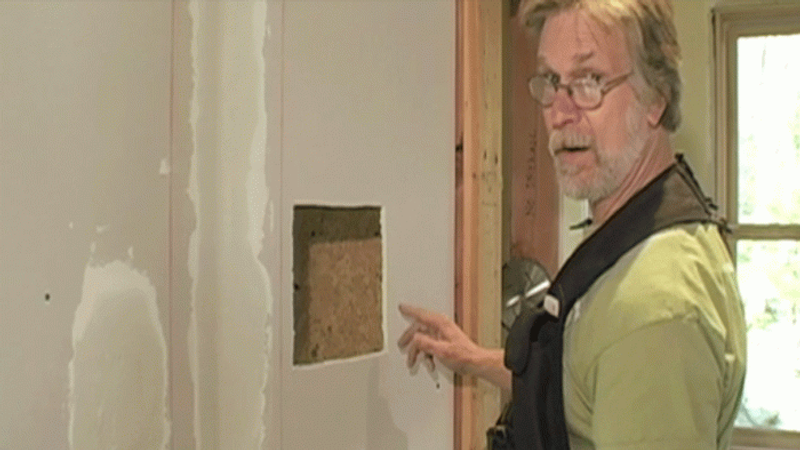
Length: 1:24
Produced By: John Ross

William Barstow of Arcata California writes:

Here is still another way to install a drywall patch in a spot that doesn't have any backing. First, cut an oversize patch, and nibble away at it until it fits the hole. Next, find a piece of plywood or lath that is longer but narrower than the hole. Slip the wood behind the drywall, and position it so that it spans the hole, as shown in the drawing. Drive drywall screws through the wallboard and into the lath to draw it up tight to the back of the gypboard. Screw the patch to the lath, and you're ready to fill the cracks with joint compound.