
Making Sense of Caulks and Sealants
Today's products adhere better, stretch farther, and last longer, but choosing the best one is harder than ever.
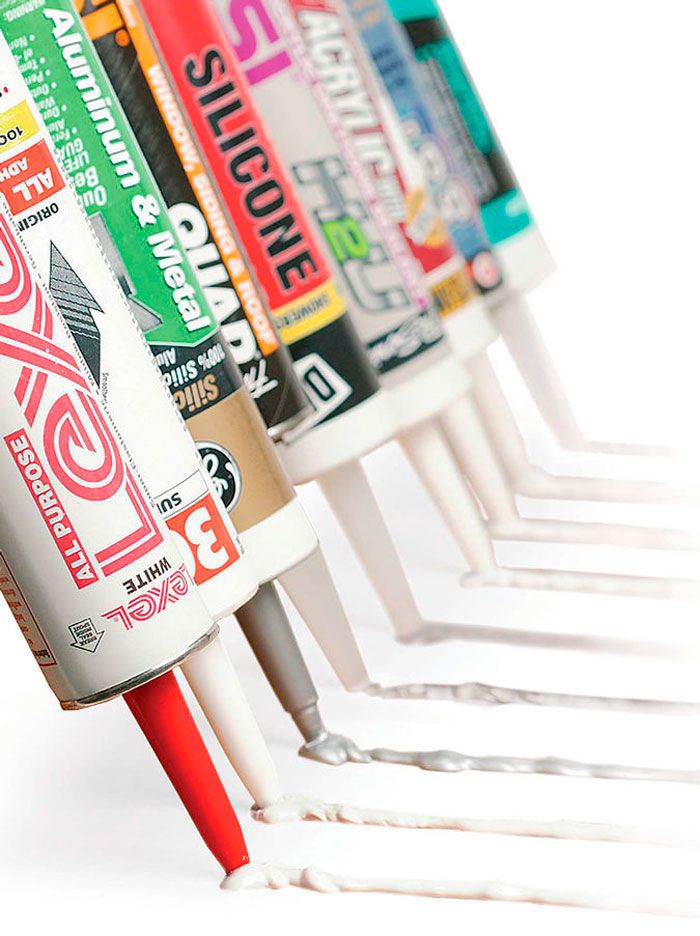
A trip to the home center for a tube of caulk can be a befuddling experience. Water-based caulks boast performance capabilities once available only in silicone. Silicone caulks advertise paintability and water cleanup. And new synthetic-rubber and modified-silicone polymers claim to do it all, adding to the confusion.
Today’s caulks and sealants perform better than ever, yet each type has unique qualities. Although it is important to read labels and follow manufacturers’ instructions, you still need to know a few things that you won’t find on the label.
Caulk is an old boat-building term; sealant originated in home building. Today, some manufacturers use caulk as an all-purpose term and sealant to describe their high-performance products. Most often, though, the terms are used interchangeably, and the products serve the same purpose: to fill gaps between building materials and to keep water and air out.
Just as they do the same job, caulks and sealants fail for the same reasons. There are three types of caulk failure: adhesive, cohesive, and substrate. Simply put, the bond between the caulk and the substrate can fail, the caulk itself can tear, or the substrate can break. However, problems with caulked joints are commonly due to one of two errors. Either the substrate was not properly prepared, or the wrong product was selected. So before choosing a product, consider how it will be used.
First, consider what materials the joint is made of and how much movement it is likely to encounter. Silicone, for example, adheres well to glass and tile but poorly to wood. Although products with different chemistries claim to be flexible, some are better suited for frequent joint movement. Remember, too, that caulk generally is not recommended for gaps wider than 1/2 in.
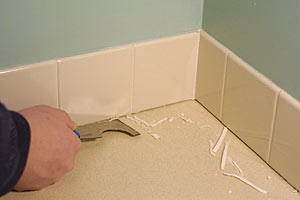
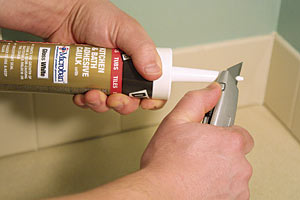
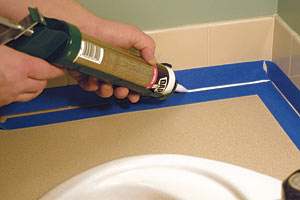
Surface Prep is the Key to Good Caulking
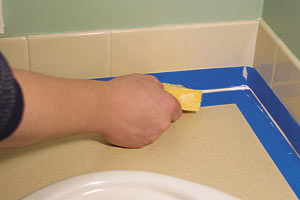
Caulking a joint isn’t as easy as it looks. If you’ve never applied caulk before, it is probably a good idea not to make your first attempt in a highly visible area. If nothing else, try gunning a consistent bead of caulk on scrap first.
 |
 |
 |
 |
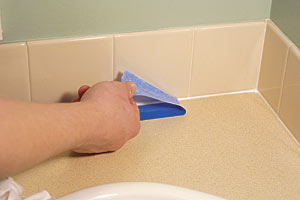 Remove the tape but protect the area until the caulk has cured. |
First, Some Things to Consider
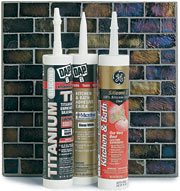
Next, consider location. If you are sealing around a sink, you want a mildew-resistant product. Kitchen and bathroom caulks resist water and mildew. Most caulks are mildew resistant, which means that mildew will not degrade the product. Mold and mildew, though, can stain cured caulk. So, in the kitchen and bathroom where water and mildew are common, a product with an added biocide is a good idea. If you need to fill a gap between vinyl windows and wood clapboards, you need a product that bonds well to both materials, is flexible, and is weather resistant.
Also consider when you are going to apply the product. Temperature, humidity, and moisture can affect application. Water-base caulks can stand up to harsh weather once they cure, but they require a few days of ideal weather to set up. In cold weather, when polyurethanes become viscous and difficult to apply, most silicones work just fine.
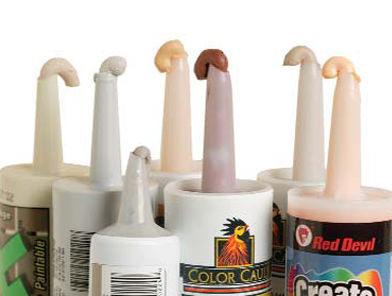
You can buy a colored caulk or mix your own. Colored and textured caulks and sealants are available to match paint, tile, grout, and other masonry materials. Red Devil’s Create a Color system (www.reddevil.com) allows you to mix latex paint with caulk while it is still inside the tube. The cured caulk will match the color of the paint.
 |
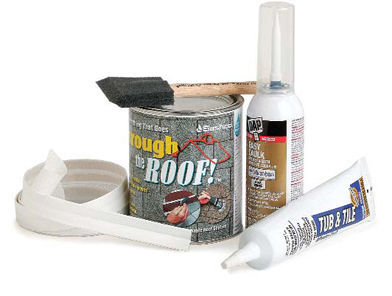 |
If you’ve never used a caulk gun before, if you have only a small job to do, or if a tube of caulk just isn’t the best option for the particular task, you may be in luck. Caulks and sealants also come in squeezable tubes, aerosol cans, brush-on formulas, and peel-and-stick applications.
Water-Based Caulks are the Easiest to Work With
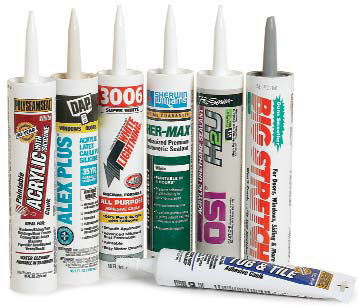
With a smooth, thin consistency, latex (latex products include vinyl and acrylic) caulks are easy to apply and tool. They clean up with water, have little odor, and are nontoxic. Water-base caulks adhere well to most common building materials, and cured water-base caulks are paintable.
Water-base caulks have come of age, and products like DAP’s Dynaflex 230 (www.dap.com) and OSI’s H2U (www.osisealants.com) combine the benefits of water-base products with the adhesion, flexibility, and durability once available only in silicones and polyurethanes. Performance, however, varies dramatically from one product to the next. The trick is to make sure you choose the best product for the job.
There’s a wide range of water-base caulk, from painter’s caulk to elastomeric sealants. Latex caulks can be used just about anywhere as long as you choose the right product for the job. Some water-base products are flexible and weather resistant for exterior joints; others are intended to hide only interior seams that are to be painted.
For most interior applications, water-base caulks and sealants are the way to go. For less than $2, you can pick up a tube of latex caulk that is perfect for sealing interior window and door casings, baseboards, and other moldings. There are high-performance water-based caulks that can be used for exterior joints, but expect to pay more for a product that will stand up to the elements. And make sure to apply water-based products only under ideal conditions.
Water-based caulks cure best in warm (above 40°F), dry weather. Humid conditions slow curing. Although water-based caulks can be applied to moist surfaces, rain can wash them away before they cure fully.
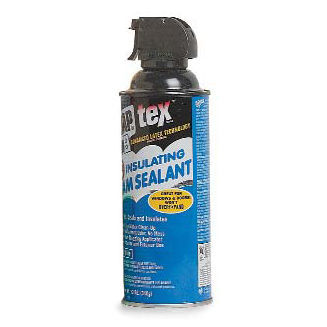
For gaps that aren’t likely to move or encounter adverse weather and for areas that would benefit from a little insulation, spray foams may be more appropriate than caulk. Water-based spray-foam sealants cure soft and spongy, making them less durable than polyurethanes. They are not water resistant, and they have a slightly lower R-value than polyurethanes. But because they expand less than polyurethanes, some folks may find them easier to use.
Silicones are the Best Sealant for Glass, Metal, and Cold Weather
One caulk-manufacturer’s representative told me that silicone soon will be a thing of the past. According to this source, other chemistries are outperforming silicones, are easier to work with, and are often less expensive. Another manufacturer, who also makes silicones, disagreed, saying that silicones are still the best product available for many applications. Both arguments have merit.
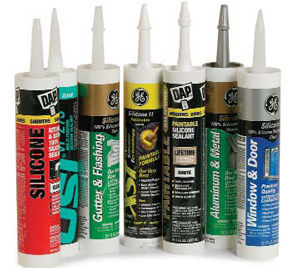
Fifty years of evolution in silicone caulks brings us an assortment of products formulated for just about every substrate. Although the competition is stiff in most areas, there is no substitute for the strength of silicone on hard surfaces like metal, glass, and tile.
Silicone is tricky to work with. It is more difficult to gun and tool than some other caulks and requires solvents to clean up. Most silicones cannot be painted. Once silicone is damaged, it tears easily, and silicone products cannot be repaired by reapplication because silicones do not adhere to cured silicone. Silicone also adheres poorly to one of the most common building materials, wood.
On the other hand, silicone stands up to extreme weather, cures soft, and remains flexible. Although silicone stinks, it is not toxic, so it can be used inside. Because silicone is inorganic, it is unaffected by UV radiation and resists mold and mildew. Silicone can be applied at virtually any temperature and can stand up to adverse weather conditions shortly after application. There are silicones formulated for most substrates, but most important, silicone adheres to nonporous substrates better than any other sealant, making it the best choice for surfaces such as glass, metal, ceramic tile, and porcelain.
Synthetic-Rubber Caulks Stretch and Recover
Synthetic-rubber products like Sashco’s Lexel (www.sashco.com) and OSI’s Quad are not labeled as a particular chemistry like silicone or polyurethane, but represent some of the most flexible and clearest-curing products on the market. These qualities make them ideal for exterior joints likely to expand and contract.
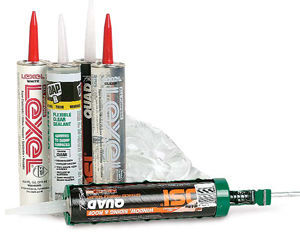
Solvent-base synthetic-rubber products adhere well to most substrates, can be applied in wet and cold weather, and resist mildew. But the qualities that set these caulks and sealants apart from the rest are the ease with which they stretch, their ability to stretch without breaking, and their ability to recover their shape.
These products have a low modulus, which means that they require only slight pressure to begin stretching. Because they stretch so easily, there is less chance that the bond or the substrate will rupture as the joint moves. Synthetic rubber also is said to have memory; when it is stretched even to extreme lengths, it returns to its original cured size and shape. All told, these qualities make solvent-base rubber caulks and sealants the best products for use on log homes, on wood siding and roofs, and in other joints that move frequently.
Synthetic-rubber caulks and sealants are paintable with water-base paints and come in clear formulas that are more transparent when cured than any other caulk. Be careful, though, because they also are flammable until they cure, shrink significantly, and have a high percentage of volatile organic compounds (VOCs). In fact, in some parts of the country, some synthetic-rubber caulks do not meet current VOC regulations. For this reason, solvent-base rubber caulks should not be used indoors.
Polyurethane Stands up to Traffic
Polyurethane can be dangerous. Not only is polyurethane stringy and odorous, but it also is toxic and potentially hazardous to your health.
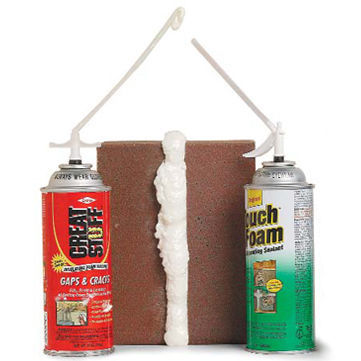
So why bother with polyurethane? Because polyurethanes are the only sealants that can stand up to abrasion. Forget that polyurethanes are paintable, flexible, and weather resistant. There is almost nowhere in residential construction that a safer product cannot be substituted — except for high-traffic areas. If you need to seal joints on a floor, on a driveway, or in a garage where there’s frequent foot or vehicular traffic, break out the rubber gloves, the respirator, and the polyurethane sealant.
Polyurethane spray foams cure rigid and have an R-value up to 4.5 per inch. But polyurethane foams are tricky to use because they expand as they cure. Polyurethane foams come in low, moderate, and highly expanding formulas, but even minimally expanding polyurethanes grow up to 300% before they cure.
Butyls are Water Resistant
Butyls are exceptionally messy. They stretch like chewing gum and have little or no ability to recover. And they have an unattractive tarlike appearance.
But as far as caulk technology has come, butyl is still the most water-resistant product available. For this reason, butyls remain viable. Gutters are a good example of the right place to use butyl. Butyl resists water, and because it never hardens completely, butyl can stand up to the random movement of a shear joint. A shear joint is where two substrates overlap. Roof flashing is another example of a shear joint, and another place where butyl is the best choice. Butyl’s resistance to moisture also makes it the best caulk to use on foundations or anywhere a sealant may be needed below grade.
The Newest Hybrids Defy Classification
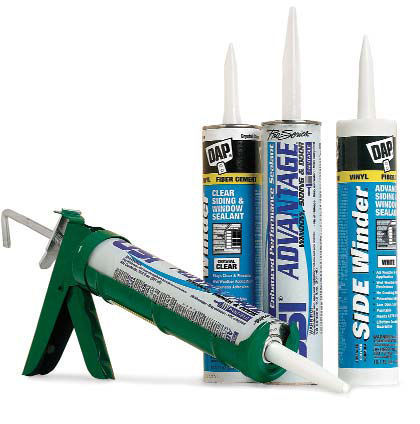
Modified-silicone polymers like DAP’s Side Winder and OSI’s Advantage represent the newest type of sealant available. They are difficult to classify because they combine the chemistry and benefits of latex, silicone, and polyurethane products into one sealant. They are expensive but worth the money for sealing important outdoor areas like windows, doors, and vents. Like latex and acrylic products, modified-silicone polymers are easy to gun. Like silicones, they can be applied in extreme temperatures and can withstand rain almost immediately. Like polyurethanes, they are incredibly durable and adhere well to almost all substrate material. They are flexible, paintable with water-base paints (use a latex primer before coating with oil-base paints), have a lower VOC content than solvent-base synthetic-rubber products, cure quickly, and don’t shrink.
The combined weatherability, durability, and flexibility of these new hybrids may make them the best product for sealing around exterior penetrations like windows, doors, and vents. At this point, the only known downfalls of modified-silicone polymers are that they are expensive. Although manufacturers put their products through rigorous testing, modified-silicone polymers have been on the market for only a few years, not long enough to prove their worth to demanding builders and homeowners.
Photos, except where noted: Scott Phillips
RELATED LINKS:
- Revive Old Caulk Tubes
- Make Caulk Last Longer
- What’s the Difference: Paintable Caulk
- How to Keep Things Clean When Caulking Trim
Fine Homebuilding Recommended Products
Fine Homebuilding receives a commission for items purchased through links on this site, including Amazon Associates and other affiliate advertising programs.

Graphic Guide to Frame Construction

A House Needs to Breathe...Or Does It?: An Introduction to Building Science

Musings of an Energy Nerd: Toward an Energy-Efficient Home





View Comments
I found this pretty helpful, but being 13.5 years old, it would be great to see an update regarding how the field looks after all of the newer caulks on the market.